
Nelson Laizer, Founder & Travel Designer
What Is a Game Drive? A Day in the Vehicle with an Emnel Guide
What a game drive is on a Tanzania safari, hour by hour: the dawn start, how your guide finds and positions for sightings, bush breakfasts, midday rest, sundowners, what is in the vehicle and how to get the most from every drive.
Reviewed November 2026 by the Emnel team in Arusha.
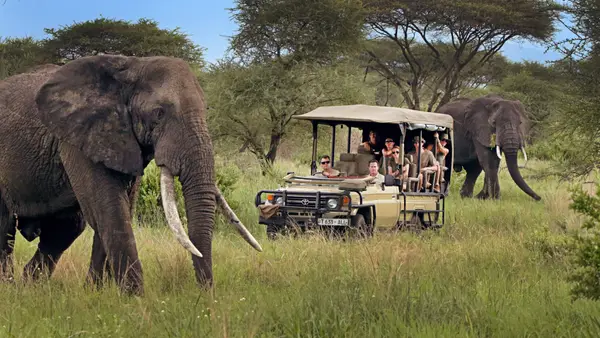
The short answer: A game drive is the heart of a safari: you explore a national park in a 4x4 vehicle with a licensed guide, looking for wildlife. In Tanzania's national parks, vehicles may drive between 6am and 6pm, so a typical day has either a morning and an afternoon drive with a rest at camp in between, or a full day out with a picnic or bush breakfast. On a private Emnel safari, the vehicle and the guide are yours alone, so the day follows your pace and your interests, not a fixed timetable.
Guests often ask us what a safari day actually feels like. Brochures show the lion and the sunset, but not the cool air before dawn, the quiet conversation as your guide reads a set of tracks, or the long, patient wait by a river bend. This article follows a day in the vehicle with one of our guides, hour by hour, so you know what to expect, and how to get the most from every drive. It is written by the people who do this every day: the team that plans your safari in Arusha is the team that guides it.
A safari day, hour by hour
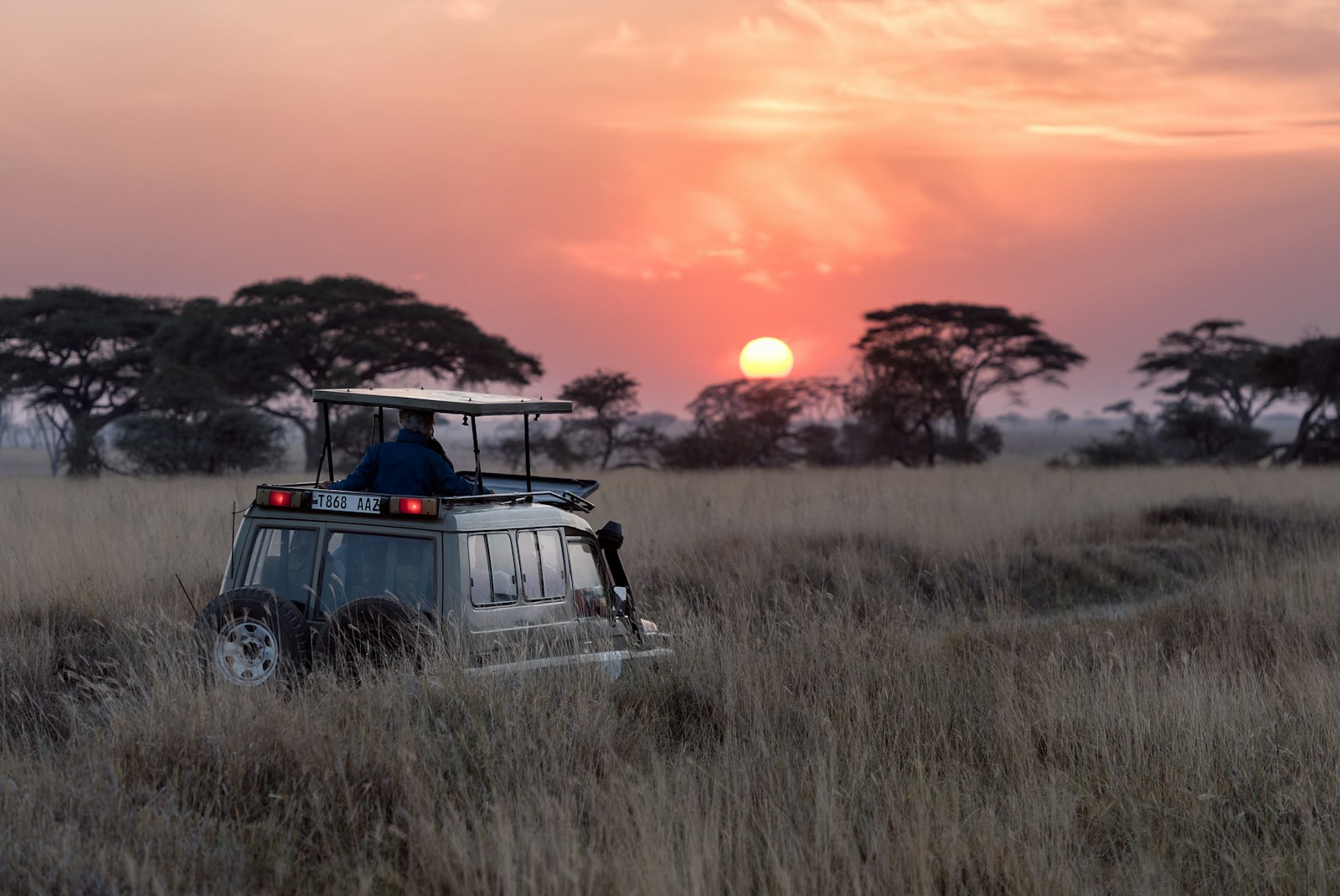
Every day is shaped around the light, the animals and you, but most days in the northern parks follow a similar rhythm.
Time | What happens | Why it matters |
|---|---|---|
5.30am | Coffee or tea at camp, a short briefing with your guide | You leave knowing the plan, and your guide knows what you most want to see |
6am | Out on the first drive as the park opens | Predators are often still active, and the light is soft and golden |
8–9am | Bush breakfast at a quiet spot, or back to camp | A slow breakfast in the open is one of the best moments of the day |
Late morning | Exploring further afield, or following a sighting | Elephants at the river, cheetahs on the move, birdlife |
12–3pm | Lunch and rest at camp, or a picnic on a full-day drive | Animals rest in the heat, and so can you |
3.30–4pm | Afternoon drive | Wildlife becomes active again as the day cools |
Before 6pm | Back at camp for a sundowner, a shower and dinner | Park rules keep vehicles off the roads after 6pm |
Before dawn: the briefing
The day begins with a hot drink and a few minutes with your guide. It is a simple conversation, but it shapes everything that follows. Your guide will ask what you are hoping to see, whether anyone wants to photograph, how the children are doing, and whether you would rather cover ground or sit patiently with one sighting. They will also tell you what they heard overnight: a lion calling to the east, hyenas near the river, the herds moving south.
Because your guide and vehicle are yours alone, you never have to fit around other guests. If you want to stay longer with a leopard, you stay. If the children need a slower morning, the plan changes. Our guide to private vs group safaris explains why this matters so much.
The first light drive
The first hour of the day is often the best. Lions may still be on a kill, hyenas return to their dens, and cheetahs start to hunt before the heat. The air is cool, so a fleece or light jacket is welcome until the sun is up.
Your guide drives slowly, scanning constantly. They are watching for the small things: fresh tracks across the road, a group of impala all looking in one direction, the alarm call of a baboon, vultures dropping out of the sky. Much of what makes a great guide happens quietly, before you have seen anything at all. We explain this in more depth in why your safari guide matters more than your lodge.
At a sighting: how your guide positions the vehicle
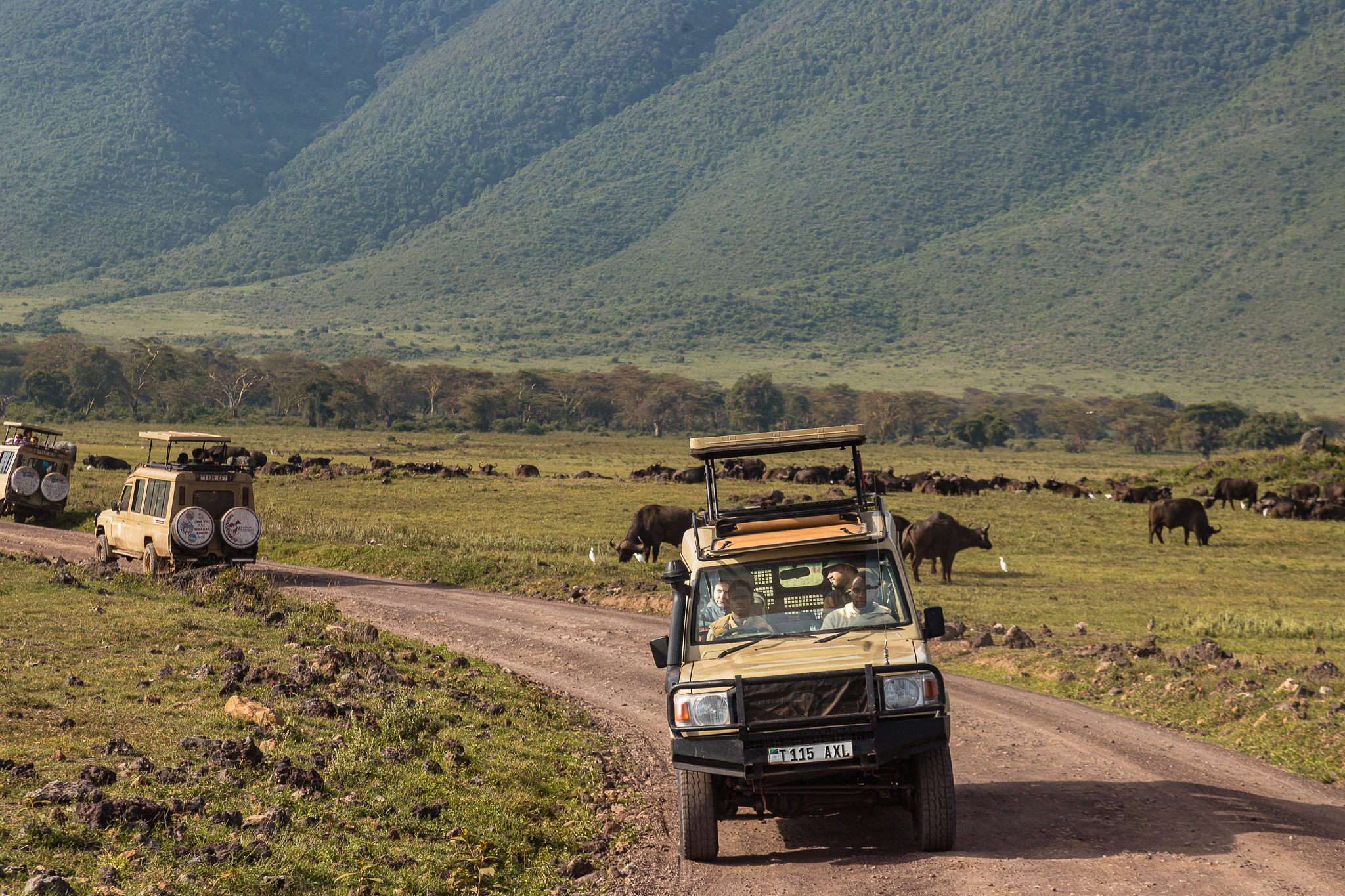
When you find something special, the way your guide handles the sighting matters as much as finding it. A good guide will:
Read the animal first. If a lioness is relaxed, they will move a little closer. If an elephant flaps its ears or turns to face you, they give it space.
Think about the light. Where possible, they position you with the sun behind you, so faces and eyes are lit for photographs.
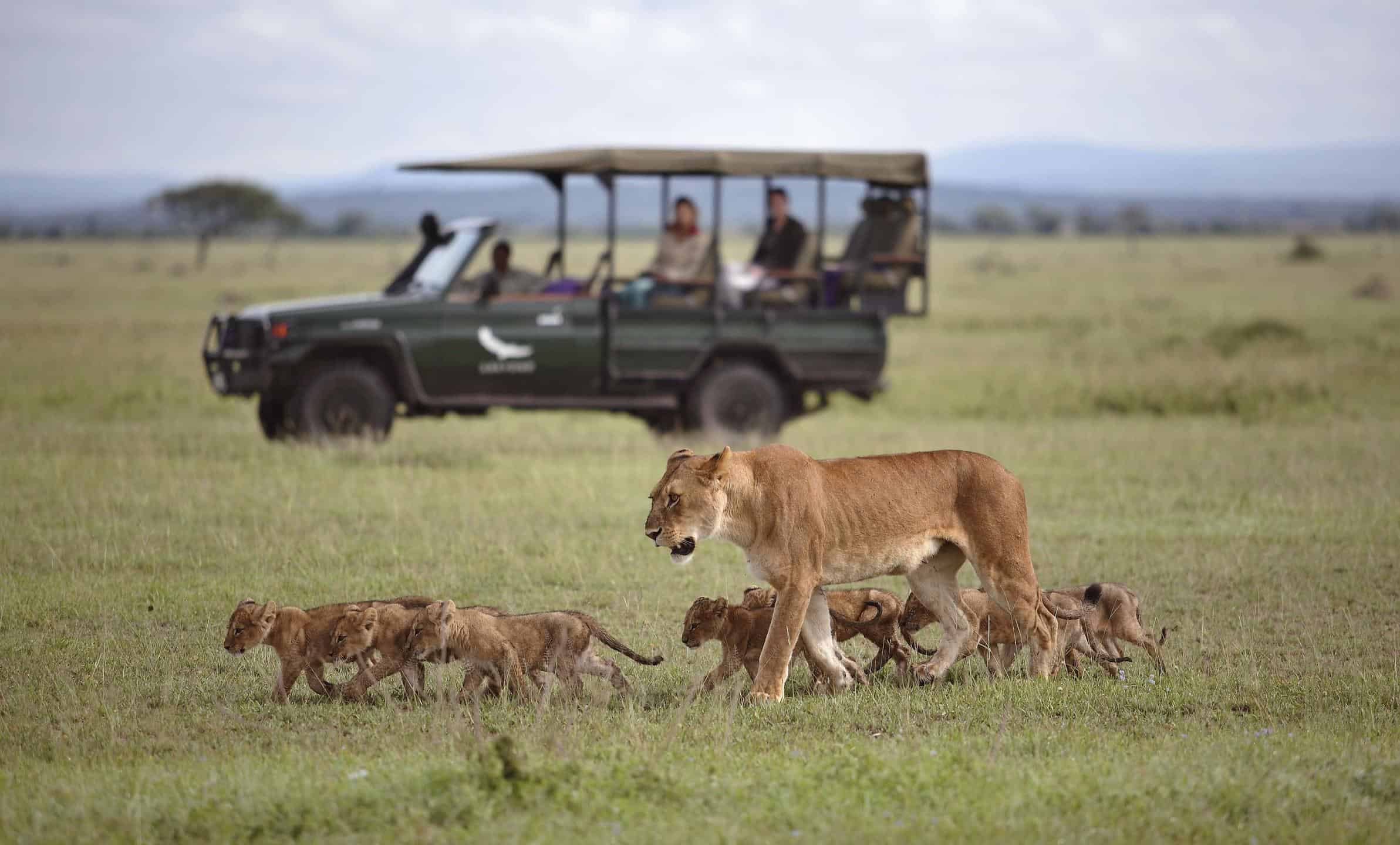
Predict what happens next. Rather than following a cheetah, they will move ahead to where it is likely to walk, then switch off the engine and wait.
Share the sighting fairly. On busy sightings, they take turns with other vehicles and know when it is time to move on.
Switch off and stay quiet. Engines off, voices low. Often the best moments come after a few minutes of stillness.
You will stay inside the vehicle at sightings; it is both the rule and the safest way to watch. Most animals see the vehicle as a single, harmless shape, which is why you can watch them so closely.
Bush breakfast and picnic lunches
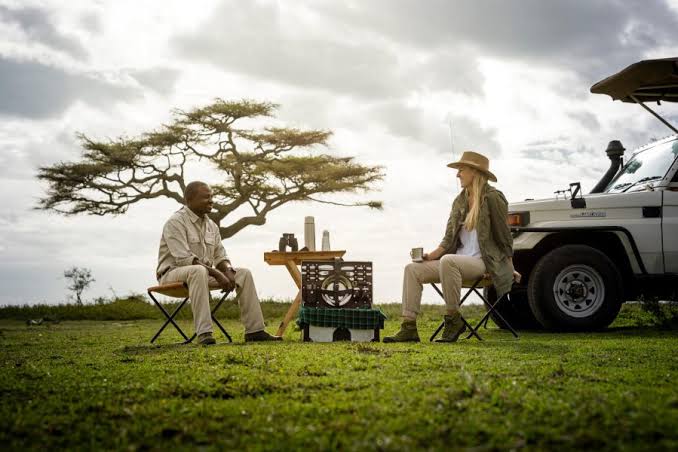
On a full-day drive, or when the morning is too good to leave, your guide will stop at a designated picnic site or a safe, open spot with a view, and set out breakfast or lunch. A table and chairs in the shade of an acacia, coffee poured as the herds graze in the distance: guests often tell us these are the moments they remember most.
Camps prepare picnic breakfasts and lunches for full days out. In the Ngorongoro Crater, the picnic sites at the Ngoitokitok springs and in the Lerai Forest are favourite stops, and our guides know which are quietest at which time of day.
Midday: rest at camp, or stay out all day?
Animals slow down in the heat of the day, and you may want to as well. There are two ways to shape a safari day, and we usually mix them across a journey.
Morning and afternoon drives | Full-day drive | |
|---|---|---|
The rhythm | Out at dawn, back to camp for lunch and rest, out again from mid-afternoon | Out from dawn to late afternoon, with a picnic breakfast and lunch |
Best for | Families with young children, camps with views and pools, hot months | The Great Migration, the calving plains, remote areas far from camp |
Time in the field | About 6–7 hours | About 8–10 hours |
The trade-off | More rest, less ground covered | More chance of finding the herds or a crossing, but a long day |
If you are travelling with children, our guide to what age is right for a safari explains how we pace the days for different ages.
The afternoon drive and sundowners
From mid-afternoon the heat eases and the animals start to move again. Elephants walk to the water, lions stir and stretch, and the light turns warm. Park rules mean every vehicle must be off the roads by 6pm, so your guide plans the final part of the drive to bring you back to camp in time.
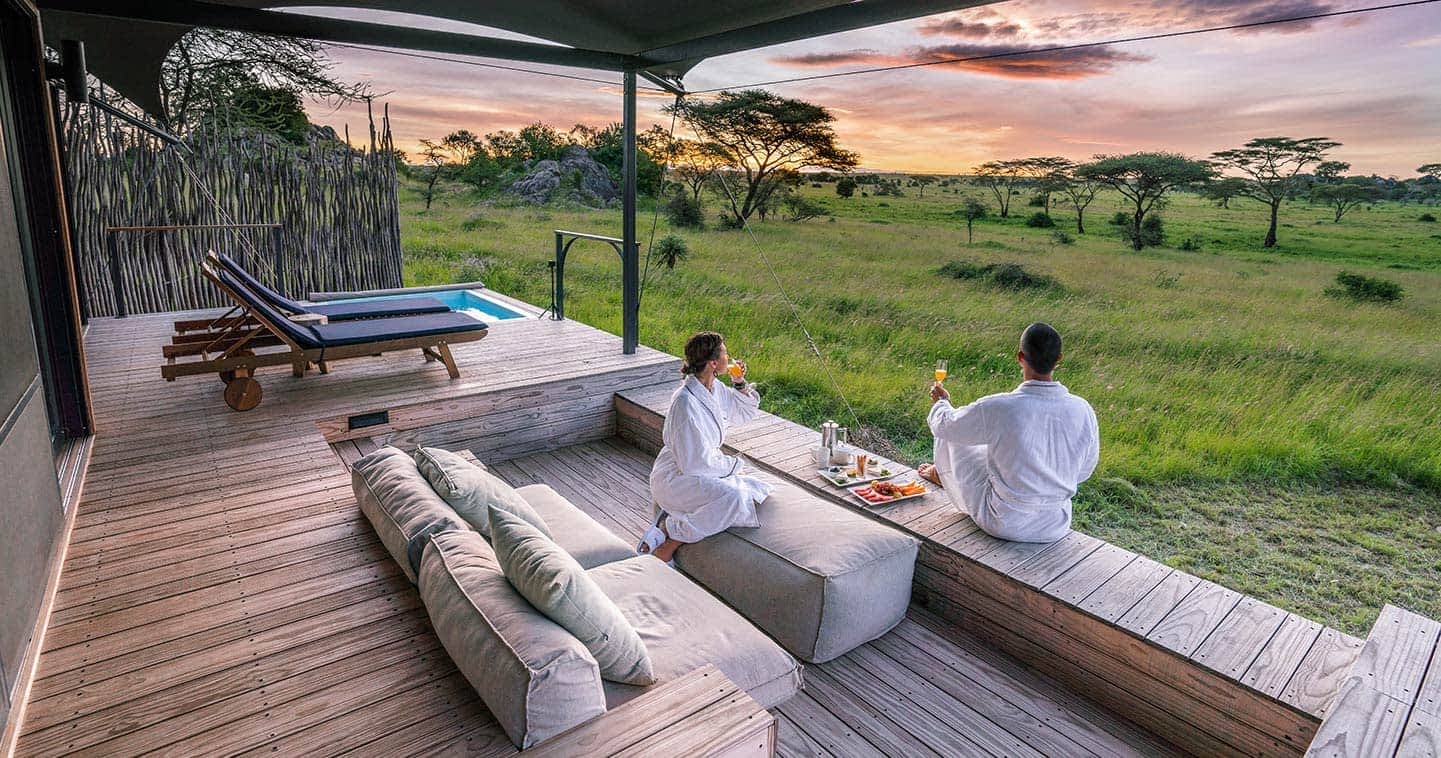
Many of our guests end the day with a sundowner, whether on a viewpoint on the way home or on the deck at camp, then a hot shower, dinner and an early night. Your guide will usually join you briefly to talk through the next day's plan.
What is in an Emnel safari vehicle
Your vehicle is your home for most of the day, so we keep it comfortable and well equipped. Every Emnel vehicle is a private 4x4 with a pop-up roof for standing and photographing, and a window seat for every guest. On board you will find:
Drinking water for the whole day
A cool box for drinks and picnic food
Field guides to the mammals and birds of East Africa
A charging point for phones and cameras
We use our own guides and our own vehicles, which is also why we can arrange a private safari at short notice when camps have space.
Game drives in the Ngorongoro Crater
A drive on the Ngorongoro Crater floor is a little different. Vehicles descend by a steep road from the rim and may only be in the crater during daylight hours. We aim to be at the descent gate as it opens, which puts you on the floor ahead of most other vehicles, often with lions, hyenas and black rhino still active in the cool morning. Read more about the Ngorongoro Crater.
Can you go on a night drive?
Night drives are not permitted in most of Tanzania's national parks, including the main areas of the Serengeti. They are offered in a few places, such as Tarangire, and in private concessions like the Singita Grumeti reserve, where camps run their own night drives with spotlights. If a night drive matters to you, tell us early and we will plan your route around it.
How to get the most from your game drives
A few simple things make a real difference to your days in the vehicle:
☐ Tell your guide on the first morning what you most want to see, and what matters less
☐ Pack layers: a fleece for the cool early mornings, and a light shirt for midday
☐ Bring binoculars, ideally one pair each, and a wide-brimmed hat
☐ Bring a soft bag for the vehicle with sunscreen, a camera and spare batteries
☐ Keep voices low and stay seated at sightings unless your guide says otherwise
☐ Ask questions: our guides love to explain what you are seeing
☐ Tell your guide when you need a rest, a toilet stop or a slower day
Our Tanzania safari packing list covers what to bring in full.
How we keep this guide current
We review this guide each year, alongside park rules and our guides' own notes from the season. Last reviewed: November 2026.
Frequently asked questions
What is a game drive?
A game drive is a guided drive through a national park or reserve in a 4x4 safari vehicle, looking for wildlife. It is the main activity on most African safaris.
How long is a game drive?
A morning or afternoon drive usually lasts three to four hours. A full-day drive, with a picnic breakfast and lunch, can last eight to ten hours.
How many game drives do you do each day?
Usually two: one in the morning and one in the afternoon, with a rest at camp in between. On some days, especially during the Great Migration, a single full-day drive works better.
What time do game drives start in Tanzania?
In the national parks, vehicles may drive between 6am and 6pm. Most mornings start around 6am, and afternoon drives around 3.30 to 4pm.
Can you get out of the vehicle on a game drive?
Only at designated picnic sites, viewpoints or where your guide says it is safe. At sightings you stay inside the vehicle.
What if we need a toilet stop?
Just tell your guide. They will stop at a park facility or find a safe, private spot.
Is a game drive bumpy?
Some roads are rough, particularly in the Serengeti and on the crater descent. Your guide drives slowly, and most guests find it very comfortable.
Plan your safari with the team who guide it
Tell us when you would like to travel and who is coming, and we will reply within 24 hours with a personal route, named camps and a clear, all-inclusive price. Every journey is planned in Arusha and guided by the team who will be with you on the ground.
Prefer to talk it through first? Contact our team in Arusha.