
Nelson Laizer, Founder & Travel Designer
What Age Can Children Go on Safari? A Parent’s Guide to Tanzania
What age children can go on safari in Tanzania: the best age by age group, real camp child policies, how a private safari adapts for children, and what a family safari costs.
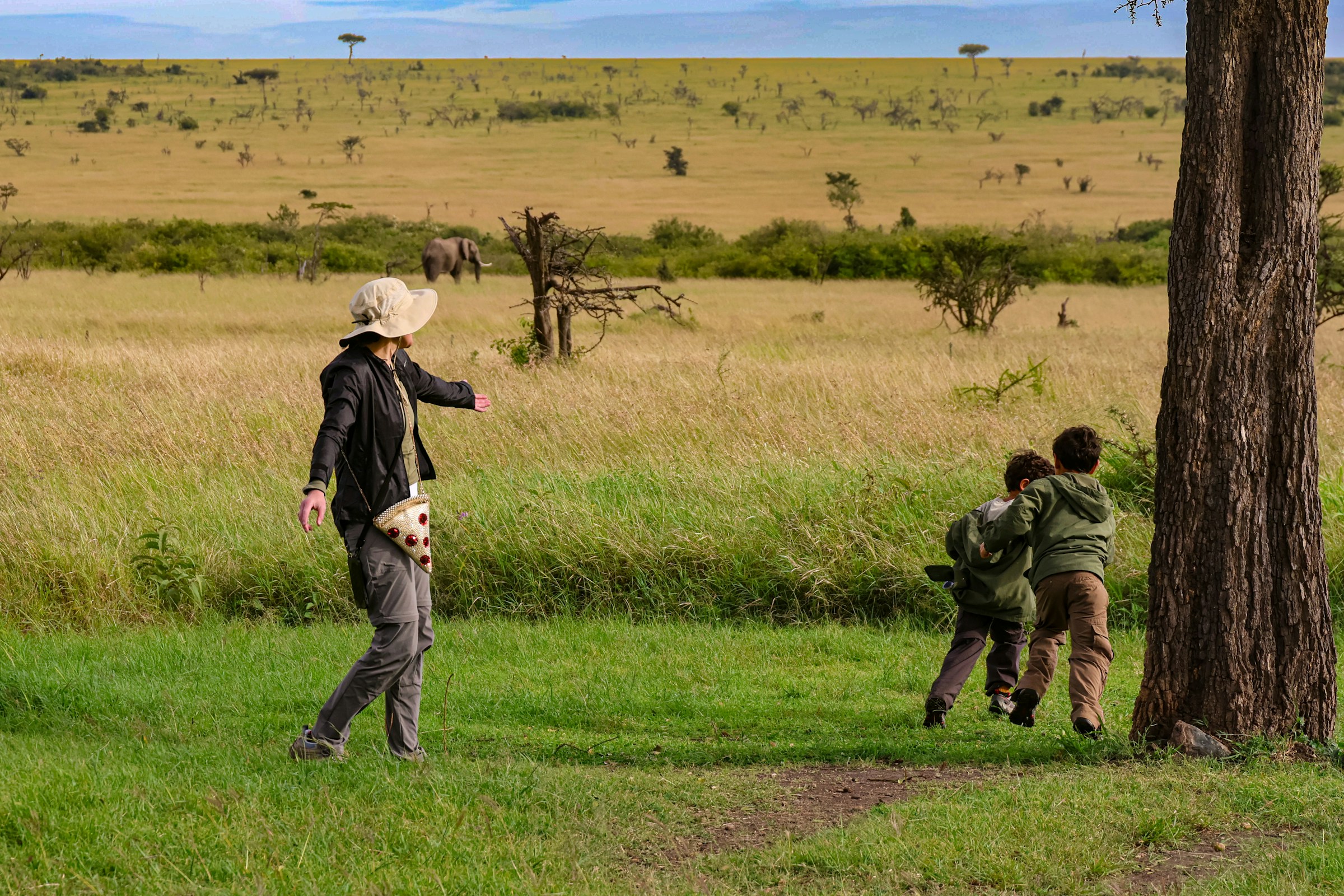
Camp child policies and park fees reviewed November 2026 by the Emnel team in Arusha.
The short answer: There is no legal minimum age for a safari in Tanzania, and children of any age can enter the national parks. The real limits are set by each camp: many luxury camps welcome all ages, some start at 5 or 6, and a few accept only children aged 10 and over. Most families find that 6 to 12 is the ideal age for a first safari, old enough to enjoy long game drives and young enough to be amazed by everything. With a private vehicle and guide, younger children can travel happily too, on a shorter, gentler route. Children under 11 travel with Emnel at 40% off the adult rate.
Parents usually ask us two questions before anything else: "Are our children too young?" and "Will they enjoy it?" This guide answers both, age by age, with the real child policies of the camps we use, how we adapt each day for children, and what a family safari costs. It is written by the team who plan family safaris in Arusha and guide them on the ground.
What age can children go on safari? The answer by age
Age | Is it a good age? | What works best | Things to know |
|---|---|---|---|
Under 5 | Possible, with the right planning | Shorter routes close to Arusha: Tarangire, Lake Manyara and the Ngorongoro Crater | Fewer camps accept very young children; drives must be short; enter parks free |
5 to 7 | Good, especially on a private safari | Half-day drives, lodges with a pool, two-night stays | Most family-friendly camps open up from 5 or 6; some balloon flights start at 7 |
8 to 12 | The sweet spot | The full northern circuit, including the Serengeti and the migration | Old enough for long drives and to remember everything; under-11s still travel at our child rate |
Teenagers | Excellent | Any route, including walking safaris, photography and remote camps | Almost every camp is open to them; walking safaris usually start at 12 or 16 |
Is there a minimum age for a safari in Tanzania?
Not by law. Tanzania's national parks admit children of all ages, and children under 5 enter free. Children aged 5 to 15 pay reduced park fees. The limits that matter come from three places:
Camp child policies. Each camp sets its own minimum age, usually for safety in unfenced camps where animals walk through at night.
Shared game drives. Camps that put several families in one vehicle often set a minimum age of about 6. On a private Emnel safari, your family has its own vehicle and guide, so this rule does not apply to your drives.
Activities. Walking safaris, hot-air balloons and some cultural visits have their own age limits, set by the camp or operator.
Camp child policies: the camps we use
This is the part most families do not see until it is too late: two camps a few kilometres apart can have completely different rules. These are the current policies of the camps we use most for families. Rules can change, so we confirm each one for your exact dates before we book.
Camp | Area | Children welcome from | For families |
|---|---|---|---|
Central Serengeti | Age 2 | Kijana Klub for ages 2–17, pool, suites and villas for families | |
Grumeti Reserve | All ages | Family cottages; activities at the guide's discretion | |
Grumeti Reserve | All ages | One family suite for two adults and two children | |
Grumeti and northern Serengeti | Age 10 | Better for older children and teenagers | |
Western Corridor | All ages | Family suite and the WILDchild programme | |
Mobile, follows the migration | Age 6 | No more than four children in camp at a time | |
Sayari Camp, Dunia Camp and Olakira Migration Camp (Asilia) | Northern, central and seasonal | Age 5 | Child-friendly meals; walking safaris from age 12 |
Moru Kopjes, south-central Serengeti | Family-friendly | A family tent for four | |
Ngorongoro highlands | Family-friendly | The Stable Cottage, with three rooms for up to six guests | |
Tarangire | Family-friendly | Pool, and children's activities from age 3 |
A pattern worth knowing: the most family-friendly camps tend to be the larger lodges and the camps with dedicated family tents, while the small, intimate tented camps closest to the Mara River are often better kept for older children. For a fuller list of the properties we use, see our accommodation guide.
Safari with young children: under 5
A safari with a toddler or preschooler is entirely possible. It simply needs a different shape. We plan these trips around short drives, familiar meals, nap times and lodges where children can move around safely.
Keep the route compact. Tarangire, Lake Manyara and the Ngorongoro Crater are all within a few hours of Arusha, and the crater floor is ideal for short, rewarding drives.
Choose the camps carefully. Fewer camps accept very young children, and some, like Four Seasons Serengeti, start at age 2. We suggest lodges with family rooms rather than remote tented camps.
Plan for flexibility. With your own vehicle, a drive can end the moment a child has had enough. There is no group to keep waiting.
Think about health early. Speak to a travel clinic about vaccinations and malaria prevention for young children well before you book. We are not medical advisers, and your clinic knows your children's needs.
Safari with children aged 5 to 7
From 5 or 6, the choice of camps opens up and children start to understand what they are seeing. They love spotting animals first, ticking them off in a book, and asking the guide endless questions.
We keep drives to half-days with a long lunch break back at camp, choose lodges with a pool for the hot afternoons, and stay two nights or more in each place so there is less packing. Some balloon flights over the Serengeti accept children from age 7. Tarangire, with its elephant herds and baobab trees, is often the park children remember most.
Safari with children aged 8 to 12: the sweet spot
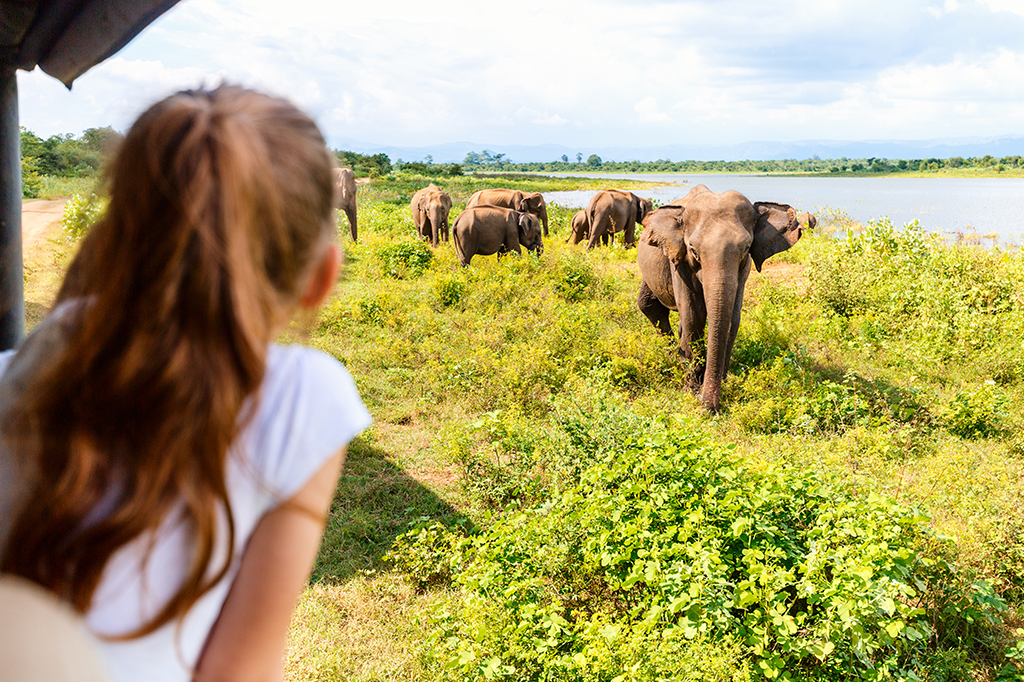
This is the age group that gets the most out of a Tanzania safari. Children can manage full days in the vehicle, follow a hunt with real patience, and remember the trip for the rest of their lives. The whole northern circuit is open to you, including the Serengeti and the Great Migration.
It is also good value: children under 11 still travel at 40% off our adult rate. Many families time this trip for the long summer holidays, when the herds are in the northern Serengeti, or for Christmas and February, when calving begins on the southern plains. Our guide to the best time for a Tanzania safari shows what each school holiday brings.
Safari with teenagers
Teenagers can go almost anywhere. Walking safaris usually start at age 12 at Asilia camps and at 16 at some others, so a teenager can track animals on foot with an armed ranger. Photography, night drives in private reserves, and conversations with guides about conservation and Maasai culture tend to win over even the most phone-attached teen. Many families add a few days on Zanzibar to finish; see our safari and Zanzibar journeys.
How we adapt a safari for children
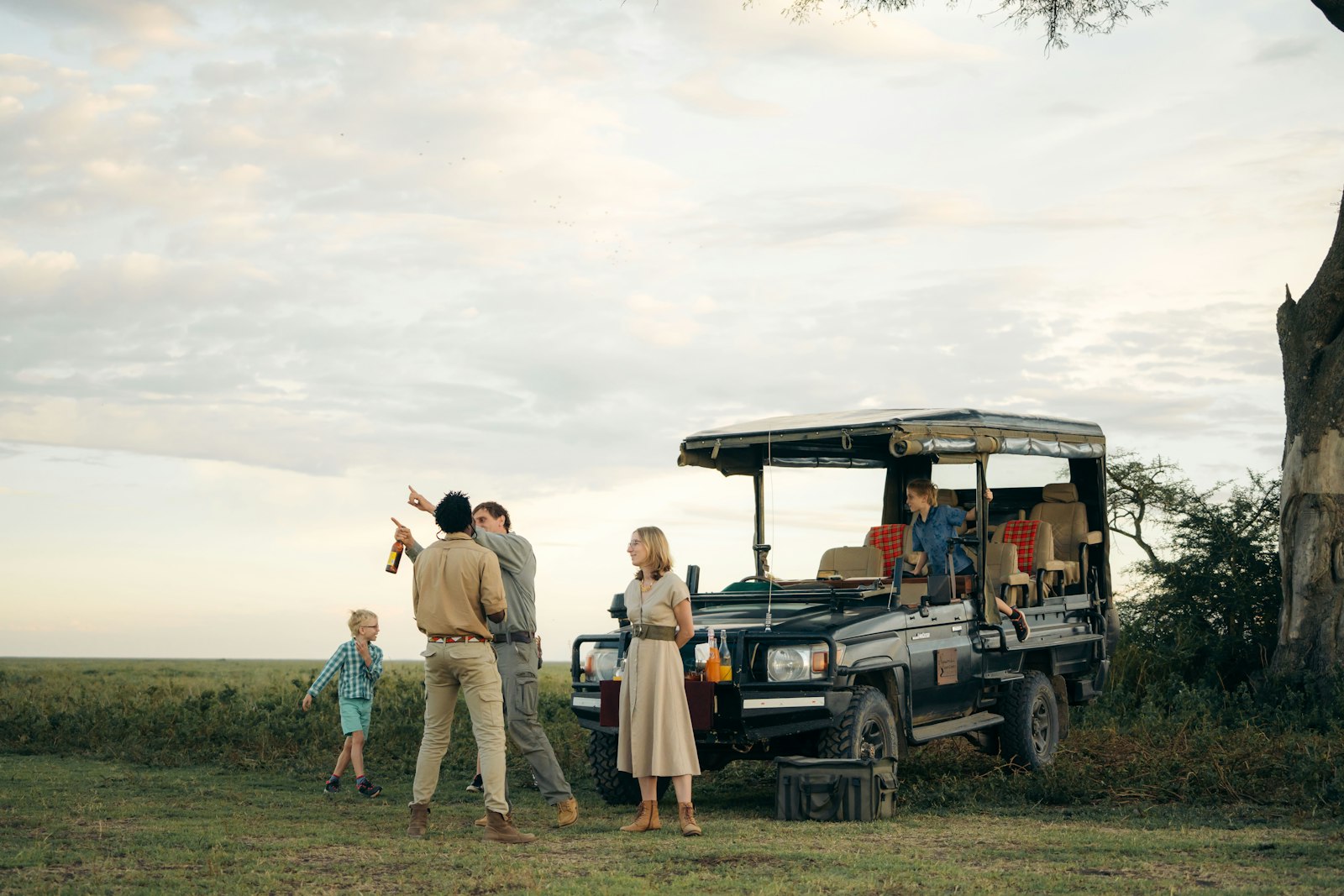
A family safari is not an adult safari with children added. With a private vehicle and your own Emnel guide, every day is shaped around your family:
Your own pace. Drives start and end when it suits your children. Toilet stops, snack stops and early returns are part of the plan.
Shorter travel days. We avoid long transfers on consecutive days and break the drive from Arusha into manageable stages.
Guides who know children. Our guides turn sightings into stories, hand over the binoculars, and help children keep their own list of animals seen.
Rooms that fit. We book family tents, family suites or connecting rooms, so younger children are never in a separate tent.
Seats and meals. Tell us your children's ages when you enquire, including whether you need child or booster seats and any food preferences, and we will plan around them.
This is why every family safari we plan is private. Our guide to private vs group safaris explains the difference, and our article on safety on a Tanzania safari covers what parents usually want to know.
What a family safari costs
Our private safaris are priced per adult per day: US$350–450 at Classic level, US$450–550 at Mid-Luxury, US$600–750 at Luxury and from US$800 at Ultra-Luxury. Children under 11 travel at 40% off the adult rate, and park fees are reduced for ages 5 to 15 and free under 5.
An example: a 6-day family safari at Mid-Luxury level for two adults and two children aged 7 and 10 costs US$2,700–3,300 per adult (6 × US$450–550) and US$1,620–1,980 per child, or about US$8,640–10,560 for the family. Your private vehicle and guide, accommodation, meals and park fees are included. For a closer look at family budgets, see what a Tanzania family safari costs.
Two of our family itineraries show how the days fit together: the 6-Day Tanzania Family Safari and the 8-Day Tanzania Family Safari.
Before you book: a checklist for parents
☐ Tell us every child's age at the time of travel, not at booking
☐ Check that each camp on your route accepts your youngest child
☐ Ask for a family tent, family suite or connecting rooms
☐ Book a travel clinic appointment for vaccines and malaria advice, ideally 8 weeks before you travel
☐ Check passport validity for every child and any entry requirements for minors travelling with you
☐ Tell us about child or booster seats, food preferences and any allergies
☐ Pack binoculars for each child, a favourite snack, and a small notebook for their animal list
“Nelson’s knowledge and guidance regarding locations and accommodation really pulled the itinerary together. He worked really hard to put together a trip which suited us as a family of 4. … There is no doubt that the real success of the trip was down to our fantastic guides Gabriel and Abasai.”
— Melanie W, family of four, 8-Day Tanzania Family Safari
How we keep this guide current
We review camp child policies, park fees and our own family rates each year, and confirm every camp's rules for your dates before we book. Last reviewed: November 2026.
Frequently asked questions
What is the minimum age for a safari in Tanzania?
There is no legal minimum age. Children of any age can enter Tanzania's national parks, and under-5s enter free. Each camp sets its own minimum age, from all ages at some lodges to 10 and over at a few small tented camps.
What is the best age to take children on safari?
Most families find 6 to 12 the ideal age for a first safari. Children are old enough to enjoy long drives and remember the trip, and young enough to be thrilled by every sighting.
Can you take a toddler on safari?
Yes, with careful planning. Choose a compact route close to Arusha, lodges that accept young children, and a private vehicle so drives can be short and flexible. Speak to a travel clinic about health advice before you book.
Can children go on game drives?
Yes. On shared drives, camps often set a minimum age of about 6, but on a private safari your family has its own vehicle and guide, so children of any age can join your drives.
Do children pay less on safari?
Yes. With Emnel, children under 11 travel at 40% off the adult rate. Park fees are reduced for children aged 5 to 15, and children under 5 enter free.
Is the Serengeti suitable for young children?
It can be, but it is a long way from Arusha by road. For children under 6, we often suggest flying into the Serengeti, or focusing on Tarangire and the Ngorongoro Crater and adding the Serengeti when they are older.
What age can children go on a walking safari?
Usually 12 at Asilia camps and 16 at some other camps, always at the guide's discretion.
Plan your family safari with the team who guide it
Tell us your children's ages, when you would like to travel and what your family enjoys, and we will reply within 24 hours with a personal route, camps that welcome your children, and a clear, all-inclusive price. Every journey is planned in Arusha and guided by the team who will be with you on the ground.
Prefer to explore first? See our family safaris, or contact our team in Arusha.