Nelson Laizer, Founder & Travel Designer
How Much Does a Great Migration Safari Cost? Prices Season by Season
What a private Great Migration safari costs in Tanzania, season by season: per-day prices at four comfort levels, park fees, light-aircraft fares, three priced examples and how to spend well.

Prices, park fees and flight fares reviewed November 2026 by the Emnel team in Arusha.
The short answer: A private Great Migration safari with Emnel costs US$350–450 per adult per day at Classic level, US$450–550 at Mid-Luxury, US$600–750 at Luxury and from US$800 at Ultra-Luxury. An 8-day migration safari therefore costs about US$2,800–3,600 per adult at Classic level, US$4,800–6,000 at Luxury and from US$6,400 at Ultra-Luxury. The season decides where in each range you land: the Mara River crossings (July to October) and the Christmas and New Year weeks sit at the top, and the green season (April and May) sits at the bottom. Children under 11 travel at 40% off the adult rate. Your private vehicle and guide, camps, meals and park fees are all included.
The migration is the one part of a Tanzania safari where timing changes the price as much as the camp does. This guide sets out what a private migration safari costs in each season, why crossing season costs more, where the money goes, and how to spend it well. It is written by the team who plan these safaris in Arusha and guide them on the ground, with the same prices we quote our guests.
Great Migration safari prices at a glance
Our private safaris are priced per adult per day, by comfort level. These are the totals for the trip lengths our migration guests most often choose:
Comfort level | Per adult, per day | 6 days | 8 days | 10 days |
|---|---|---|---|---|
Classic | US$350–450 | US$2,100–2,700 | US$2,800–3,600 | US$3,500–4,500 |
Mid-Luxury | US$450–550 | US$2,700–3,300 | US$3,600–4,400 | US$4,500–5,500 |
Luxury | US$600–750 | US$3,600–4,500 | US$4,800–6,000 | US$6,000–7,500 |
Ultra-Luxury | From US$800 | From US$4,800 | From US$6,400 | From US$8,000 |
All prices are per adult, for a private safari. Children under 11 travel at 40% off the adult rate. A light-aircraft flight between the Serengeti and Arusha, if your route includes one, is shown separately in your quote; the published fares are set out below.
The calculation is simple: an 8-day safari at Luxury level at US$650 per adult per day is US$650 × 8 = US$5,200 per adult. For how these prices compare with a general Tanzania safari, and what each level feels like, see our guide to how much a Tanzania safari costs.
What a migration safari costs, season by season
The herds move through the Serengeti in a yearly loop, and the camps closest to them are in demand at different times. This is where a migration safari typically lands within our price ranges in each season:
Season | Where the herds usually are | Demand | Where your price lands |
|---|---|---|---|
Late December to March (calving) | Ndutu and the southern plains | High, peaking in February | Middle to upper end of each range |
Christmas and New Year | Arriving on the southern plains | Peak | Top of each range |
April and May (green season) | Moving through the central Serengeti | Lowest of the year | Lower end of each range |
June to early July | Western Corridor and the Grumeti River | Rising | Middle of each range |
July to October (river crossings) | Northern Serengeti and the Mara River | Peak | Top of each range |
November | Heading south through Lobo and the centre | Moderate | Lower to middle of each range |
For a map of where each of these areas sits in the park, see our Serengeti map and regions guide.
December to March: calving season in Ndutu
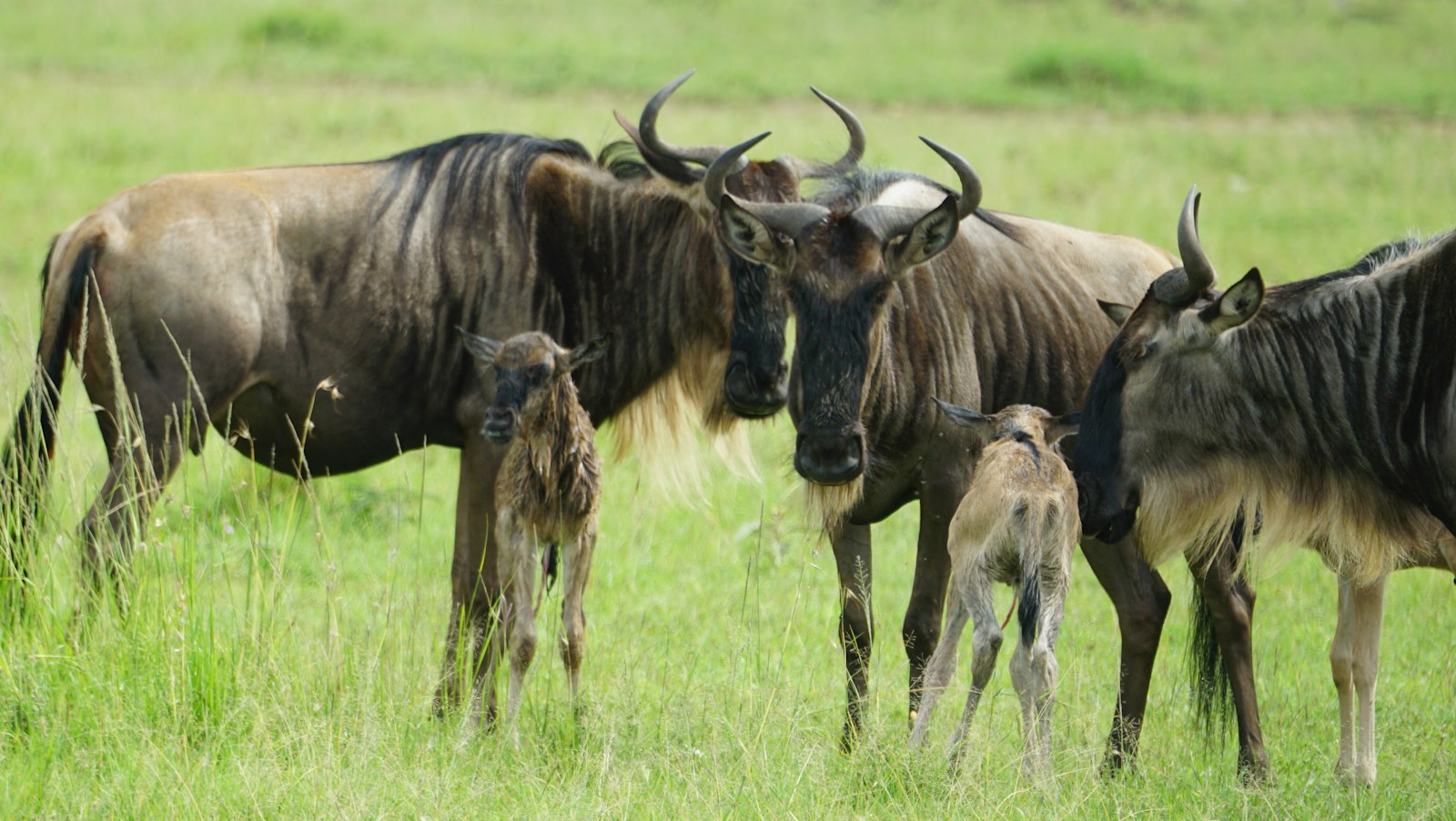
Calving season is one of the most rewarding times to see the migration: hundreds of thousands of calves born on the short-grass plains, and the lions, cheetahs and hyenas that follow them. Demand peaks in February. The Ndutu area sits inside the Ngorongoro Conservation Area, so Ngorongoro fees (US$70.80 per adult per 24 hours) apply there rather than Serengeti fees.
The camps we use: at Mid-Luxury, Ndutu Safari Lodge and Intimate Camp Zebra Ndutu; at Luxury, Lemala Ndutu, Lake Masek Tented Lodge and Nyikani Migration Camp; at Ultra-Luxury, Olakira Migration Camp and Mwiba Lodge. More on this season in our guide to calving season in Ndutu.
April and May: the green season, and the best value
The long rains bring the quietest months of the year, and the best value. The herds move through the central Serengeti, the landscape is at its greenest, and you share sightings with very few other vehicles. Serengeti park fees drop from US$82.60 to US$70.80 per adult per 24 hours between 15 March and 15 May, and many camps offer their lowest rates. Some seasonal camps close, so we base guests at permanent lodges and camps in the central Serengeti.
For many guests, this is the season to move up a comfort level for the same budget. Expect afternoon rain, some muddy tracks, and a guide who knows which loops stay passable.
June to early July: the Western Corridor
As the herds turn north, they gather in the Western Corridor and cross the Grumeti River. Demand rises through June but is still below crossing season, which makes this a good-value window for a migration safari. The camps we use here include Mbalageti Serengeti (Mid-Luxury), Kirawira Serena Camp (Luxury), and, in the private Grumeti reserves, Singita Sasakwa Lodge and &Beyond Grumeti Serengeti River Lodge (Ultra-Luxury).
July to October: the Mara River crossings
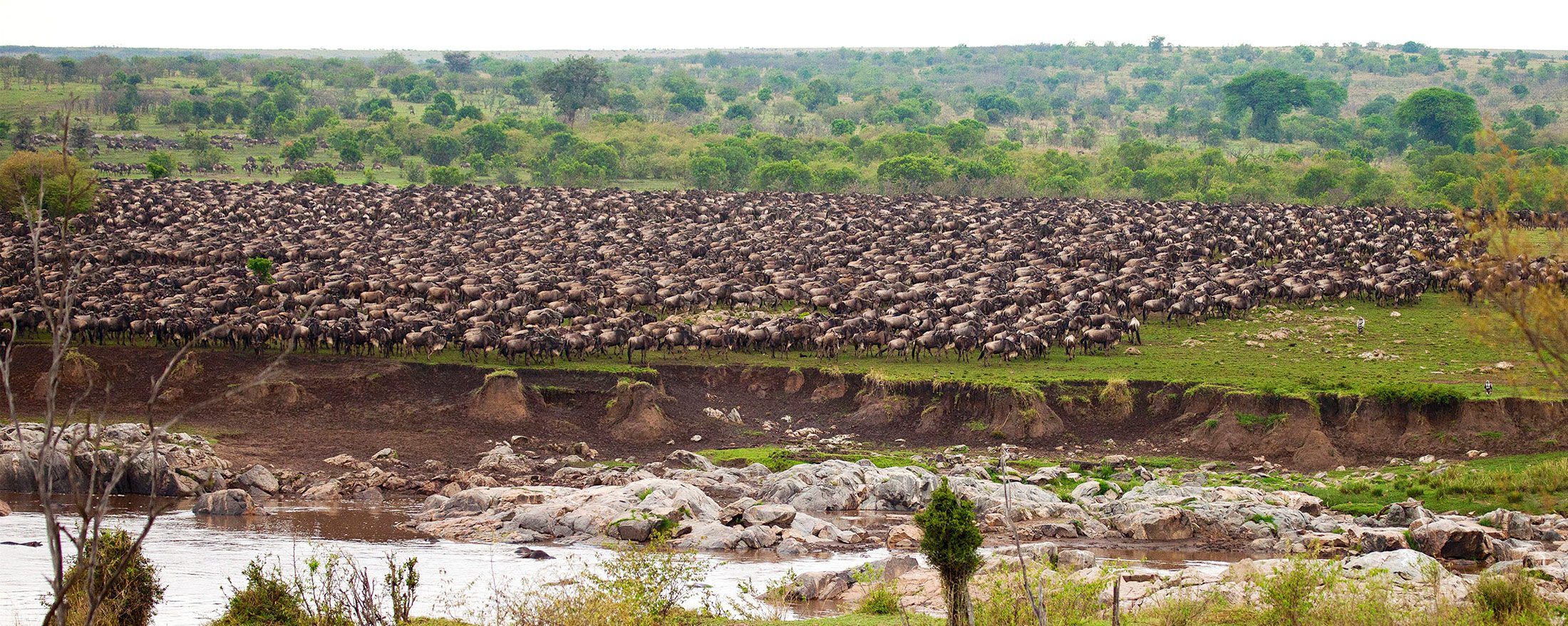
Crossing season is the most in-demand time of year, and it is where migration safaris cost the most. The riverside camps of the far north are few, and most of them are at the upper levels: Mara Mara Tented Camp and &Beyond Serengeti Under Canvas at Luxury; Sayari Camp, Singita Mara River Tented Camp, Kuria Hills Lodge and One Nature Mara River at Ultra-Luxury. How the crossings work, and how we position guests for them, is in our guide to Mara River crossings in Tanzania.
November: the return south
As the short rains begin, the herds stream south through Lobo and the eastern Serengeti. It is a quieter, good-value month with plenty of movement. Our guides follow reports closely at this time of year, because the herds can move quickly.
For every migration camp we use in each season, see where to stay for the Great Migration, season by season.
Why the Mara River crossings cost more
Guests are sometimes surprised that the same length of safari costs more in August than in May. There are four honest reasons:
Demand for very few beds. The crossing points on the Mara River are served by a small number of camps, and they fill a year or more ahead. Their rates are at their highest from July to October.
The north is remote. Kogatende is a long day's drive from the central Serengeti. Many guests fly at least one way, which adds a light-aircraft seat to the cost.
Crossings need time. Crossings cannot be scheduled, so we recommend at least three nights in the north. Fewer nights saves money but lowers your chances.
More of the camps are Ultra-Luxury. There is less choice at Classic and Mid-Luxury level close to the river than in the central Serengeti or at Ndutu.
If seeing a crossing is the reason for your trip, it is worth paying for. If you want to see the herds and the predators but a crossing is not essential, calving season or the Western Corridor can give you an extraordinary migration safari for less.
Where the money goes: park fees on a migration safari
Government park fees are the largest fixed cost of any Serengeti safari. They are the same for every operator and are included in all our prices.
Fee | Per adult, non-resident (incl. 18% VAT) |
|---|---|
Serengeti National Park conservation fee | US$82.60 per 24 hours (US$70.80 from 15 March to 15 May) |
Serengeti concession fee, for each night you sleep inside the park | About US$70.80 per night |
Ngorongoro Conservation Area entry (including Ndutu) | US$70.80 per 24 hours |
Ngorongoro Crater service fee | US$295 per vehicle, per descent |
On a typical 8-day migration route with four nights in the Serengeti, a night at Ngorongoro with a crater descent, and a day in Tarangire, government fees alone come to roughly US$950–1,100 per adult for two people sharing a vehicle. That is why a migration quote that looks far cheaper than others usually means fewer nights in the park, camps outside it, or a shared vehicle. Our guide to choosing a safari operator in Tanzania explains what to check.
Drive or fly? Light-aircraft fares to the migration
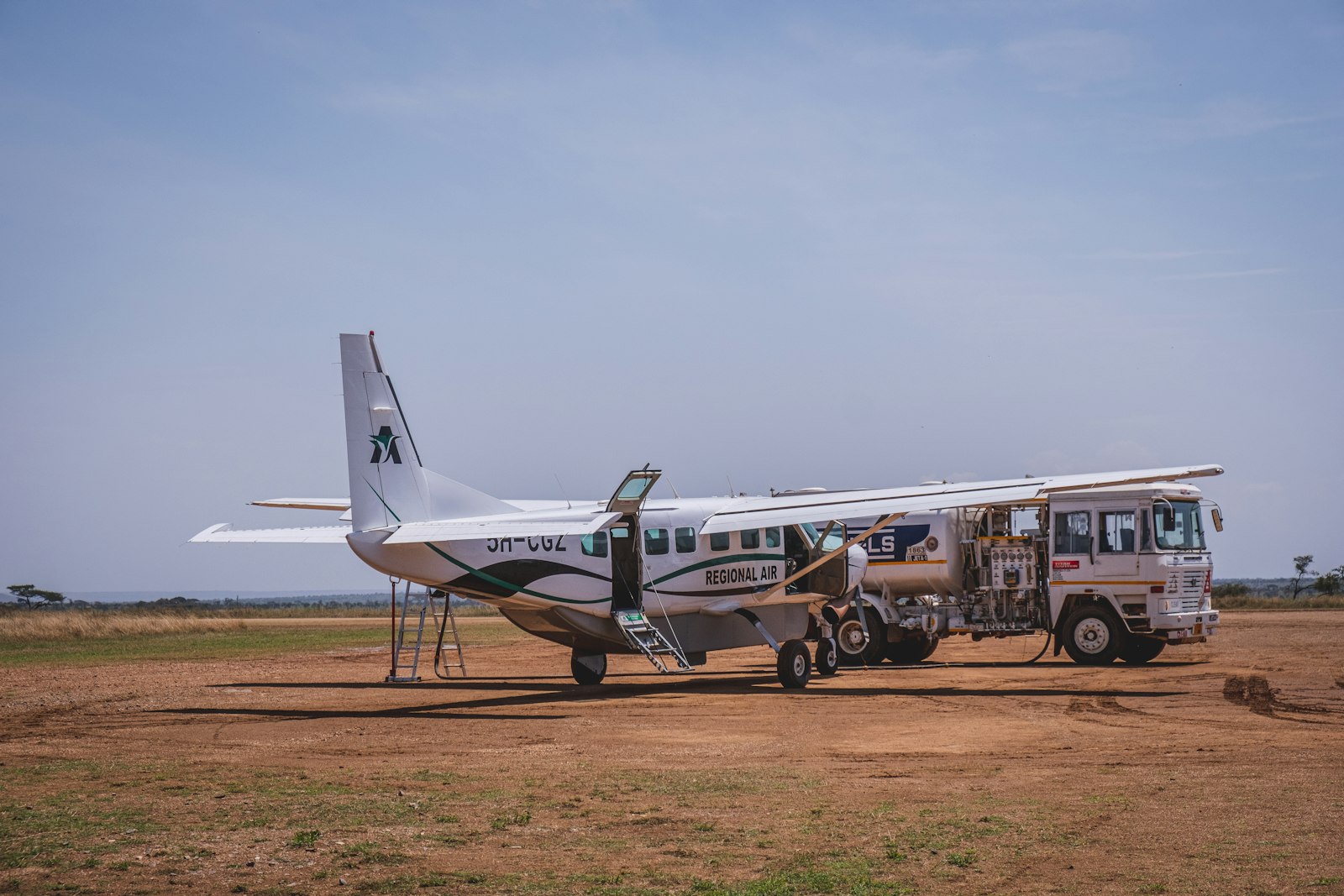
Flying is not only a luxury on a migration safari. When the herds are in the far north, flying one way can save two days of driving, and on a Luxury safari those days cost more than the flight. These are Coastal Aviation's published one-way adult fares for the routes our guests use most:
Route | Published one-way fare, per adult |
|---|---|
Arusha to Seronera (central Serengeti) | US$259 |
Arusha to Lake Ndutu (calving area) | US$343 |
Arusha to Grumeti (Western Corridor) | US$355 |
Arusha to Kogatende (Mara River) | US$355 |
Seronera to Kogatende | US$287 |
Serengeti to Zanzibar | US$568–680, depending on the airstrip |
Fares are per person, exclude airport taxes and safety fees, and allow 15 kg of luggage in soft bags. Child fares apply from age 2 to 12. Airlines can change fares, so we always quote the rate in force for your dates. The most common pattern we suggest is to drive in through Tarangire and Ngorongoro with your guide, then fly out from the Serengeti, so you see the landscapes on the way in and avoid the long drive back.
Three migration safaris, priced
These examples show how the numbers come together. Every safari we plan is private and built around your dates, so treat them as a guide.
1. Mara River crossings for a couple, Luxury, 8 days in August
Tarangire, the Ngorongoro Crater, two nights in the central Serengeti and three nights near the Mara River at Mara Mara Tented Camp, flying out from Kogatende. At the top of the Luxury range in crossing season: about US$6,000 per adult (8 × US$750), plus the Kogatende to Arusha flight at US$355 per person.
2. Calving season for a family, Mid-Luxury, 7 days in February
Two adults and two children under 11, with Tarangire, the crater, two nights in the central Serengeti and two nights at Ndutu Safari Lodge, driving the whole way. Per adult: US$3,150–3,850 (7 × US$450–550). Per child: US$1,890–2,310. For the family: about US$10,080–12,320 in total. See also our guide to what a Tanzania family safari costs.
3. Green-season migration, moving up a level, 6 days in May
Two nights near the Crater and four nights in the central Serengeti as the herds pass through, at Luxury camps at the lower end of the range: from about US$3,600 per adult (6 × US$600). For roughly the price of a Mid-Luxury safari in August, you stay a level higher, with the plains green and far fewer vehicles.
How to spend well on a migration safari
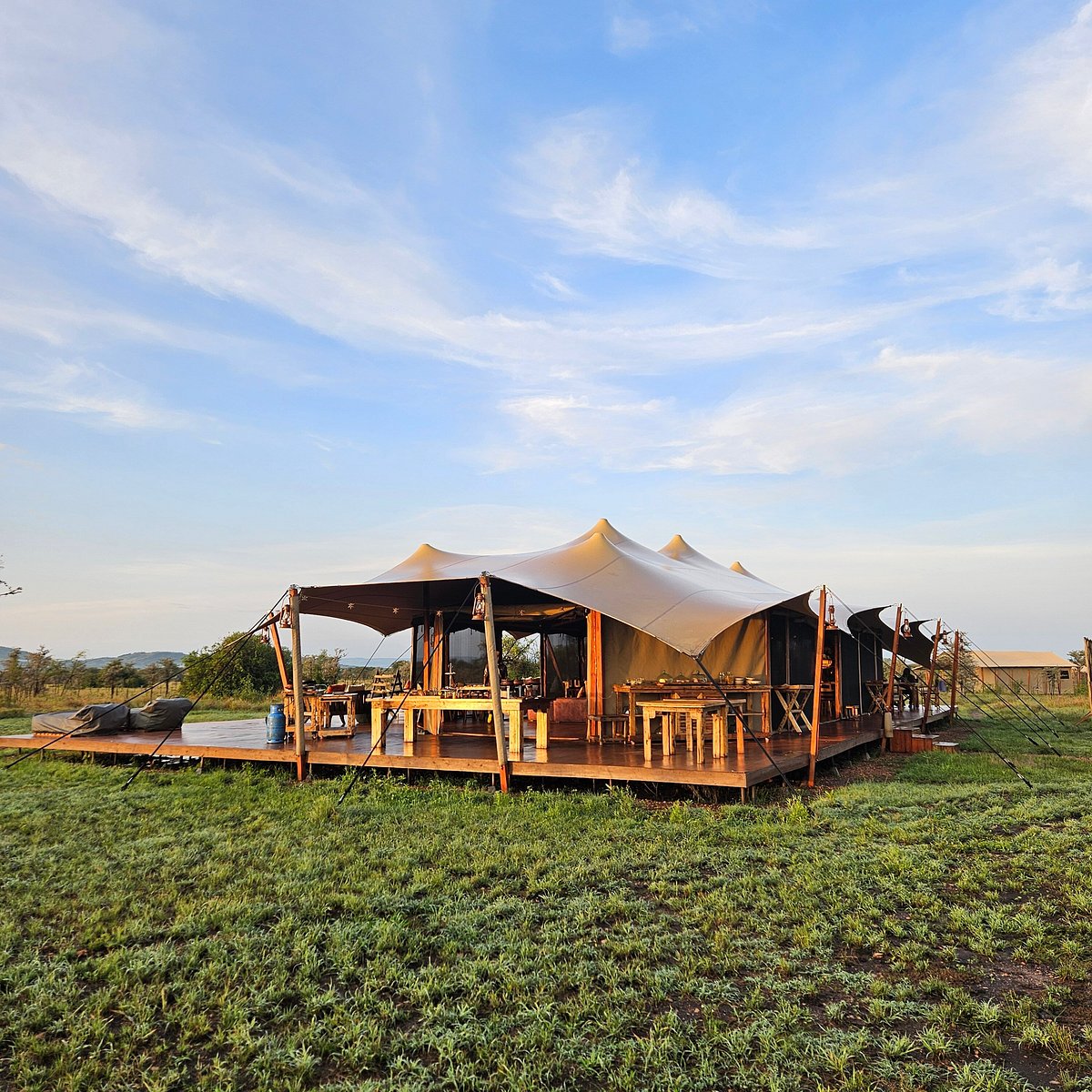
Spend on the nights closest to the herds. Many guests stay at a Mid-Luxury camp in the central Serengeti and choose a Luxury or Ultra-Luxury camp for the nights at the river or on the calving plains. You get the location where it matters most.
Look at the edges of each season. Late June, early November and the first half of December often bring good migration viewing with lower demand than the peaks.
Fly one way, not both. Driving in shows you Tarangire and the Ngorongoro highlands; flying out saves the long return.
Move camps less often. Three nights in one place beats three one-night stays: less time packing, more time with the animals, and often a better rate.
Book early for crossing season and Christmas. The price of the best-located camps does not fall closer to the date; what disappears is the choice. For crossing season, nine to twelve months ahead is ideal.
Keep it private. A private vehicle costs a little more than a shared one, but on a migration safari it lets your guide wait at a crossing point for as long as it takes. We explain the difference in private vs group safaris.
What is included in our migration safari prices
Included: your own private 4x4 safari vehicle with a pop-up roof; a professional Emnel guide throughout; accommodation as set out in your itinerary, with meals on safari; all national park, conservation and concession fees, and the Ngorongoro Crater fee where your route includes it; game drives; airport transfers where specified; drinking water in the vehicle; and our team in Arusha throughout your trip.
Not included: international flights, Tanzania visa fees, travel insurance, tips for guides and camp staff, personal expenses, premium drinks where the camp does not include them, and domestic flights unless they are part of your proposal. Our cancellation policy is published in full.
“As a female solo traveler, I felt safe, comfortable, and cared for throughout the entire trip. … A special shoutout to Josh, my guide — the true captain of my safari. He treated me like family, shared countless stories, and taught me so much about wildlife.”
— Sujana H, solo traveller, 7-Day Serengeti Safari & Zanzibar
How we keep this guide current
We review these prices, park fees and flight fares each year, and whenever the authorities or airlines change them. Last reviewed: November 2026. Park fees and airfares can change after you read this, so every quote we send uses the rates in force for your travel dates.
Frequently asked questions
How much does a Great Migration safari cost?
A private Great Migration safari with Emnel costs from US$350 per adult per day at Classic level to US$800 or more at Ultra-Luxury. An 8-day migration safari costs about US$2,800–3,600 per adult at Classic level, US$3,600–4,400 at Mid-Luxury, US$4,800–6,000 at Luxury and from US$6,400 at Ultra-Luxury.
What is the cheapest time to see the Great Migration?
April and May, the green season, when demand is lowest, many camps offer their lowest rates and Serengeti park fees are reduced between 15 March and 15 May. November and late June are also good value.
Why is crossing season more expensive?
The Mara River crossings happen from July to October in the remote northern Serengeti, where there are few camps and most are Luxury or Ultra-Luxury. Demand is at its highest, and many guests fly at least one way.
Are park fees included in the price?
Yes. All national park, conservation and concession fees, and the Ngorongoro Crater fee where your route includes it, are included in our per-day prices.
How many days do I need for a Great Migration safari?
We suggest at least six days, with three nights in the area where the herds are. Seven to ten days lets you add Tarangire and the Ngorongoro Crater without rushing. Our guide to how many days you need has sample routes.
Do children pay less on a migration safari?
Yes. Children under 11 travel at 40% off the adult rate. Children aged 5 to 15 also pay reduced park fees, and children under 5 enter the parks free.
How far ahead should I book a migration safari?
Nine to twelve months ahead for July to October and for Christmas and New Year; six months is usually enough for the other months.
Plan your migration safari with the team who guide it
Tell us when you would like to travel, who is coming and which part of the migration matters most to you, and we will reply within 24 hours with a personal route, named camps and a clear, all-inclusive price. Every journey is planned in Arusha and guided by the team who will be with you on the ground.
Prefer to start with an example? See our Great Migration safaris, the 9-Day Luxury Safari, or the 4-Day Fly-in Serengeti Safari. Or contact our team in Arusha, and read our Great Migration guide for where the herds are each month.