
Nelson Laizer, Founder & Travel Designer
Mara River Crossings: When and Where to See Them in Tanzania (2027 Guide)
When and where to see the Great Migration river crossings in Tanzania: the best months, Kogatende and the Lamai Wedge, what a crossing day is really like, where to stay on the Mara River, routes, costs and honest trade-offs.

Reviewed November 2026 by the Emnel team in Arusha.
The short answer: The Great Migration's Mara River crossings usually take place from July to October, with the most reliable activity often in August and September, in the far northern Serengeti around Kogatende and the Lamai Wedge, close to the border with Kenya. The herds cross many times in both directions, but no one can predict the day or the hour. To give yourself a real chance, plan at least three nights at a camp near the river, travel with a private vehicle so you can wait as long as it takes, and book 9 to 12 months ahead.
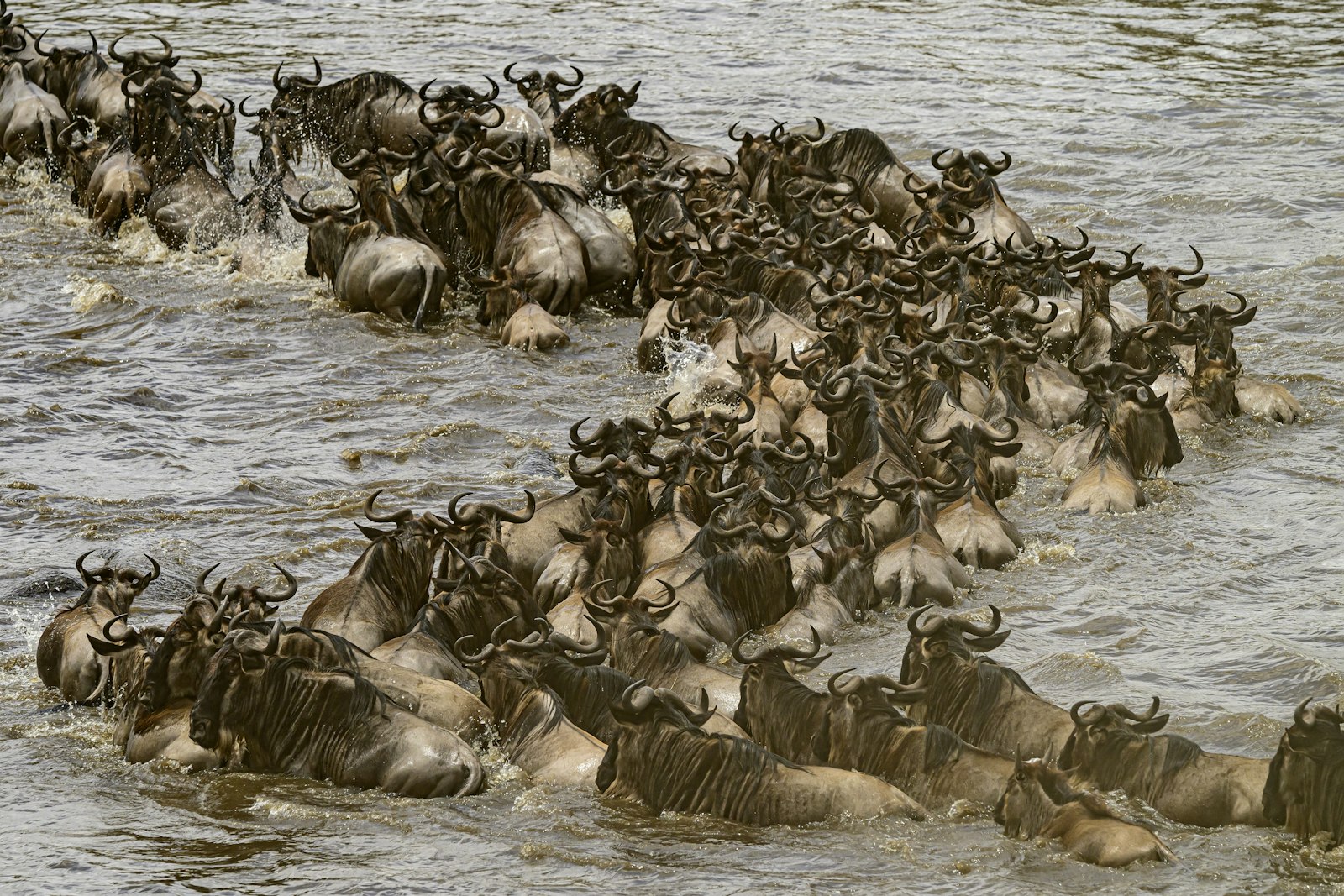
A river crossing is the moment most people picture when they think of the Great Migration: thousands of wildebeest gathering on a high bank, hesitating, then plunging into the current as crocodiles wait below. It is also the part of the migration most surrounded by myths about guarantees and perfect dates. This guide is written by the team who guide guests on the Mara River every season, and sets out honestly when to go, where to stay, what a crossing day is really like and how to plan it well.
When do the river crossings happen?
The herds follow the rain and the fresh grass it brings, so the timing shifts from year to year. This is the pattern our guides plan around:
Month | Where the herds usually are | Crossing activity |
|---|---|---|
June | The Western Corridor and the Grumeti River | Grumeti River crossings, smaller and harder to predict |
July | Arriving in the northern Serengeti | The first Mara River crossings, usually from mid-July |
August | The northern Serengeti and the Masai Mara | Often the most reliable crossing month |
September | The northern Serengeti and the Masai Mara | Frequent crossings in both directions |
October | Beginning to drift south as the short rains approach | Crossings continue, becoming less predictable |
November | Moving south through the central Serengeti | The crossing season is over |
For the full year, including calving season on the southern plains, see our month-by-month Great Migration guide and our guide to the best time for a Tanzania safari.
Planning a crossing safari? Tell us your dates and we will suggest the camps and route that give you the best chance at the river. We reply within 24 hours. Plan my safari
Where the crossings happen in Tanzania
The Mara River rises in Kenya, flows south into the far north of the Serengeti, then turns west towards Lake Victoria. On the Tanzanian side, the crossings happen along the stretch of river around Kogatende, the main area for camps and the airstrip, and the Lamai Wedge, the triangle of land between the river and the Kenyan border.
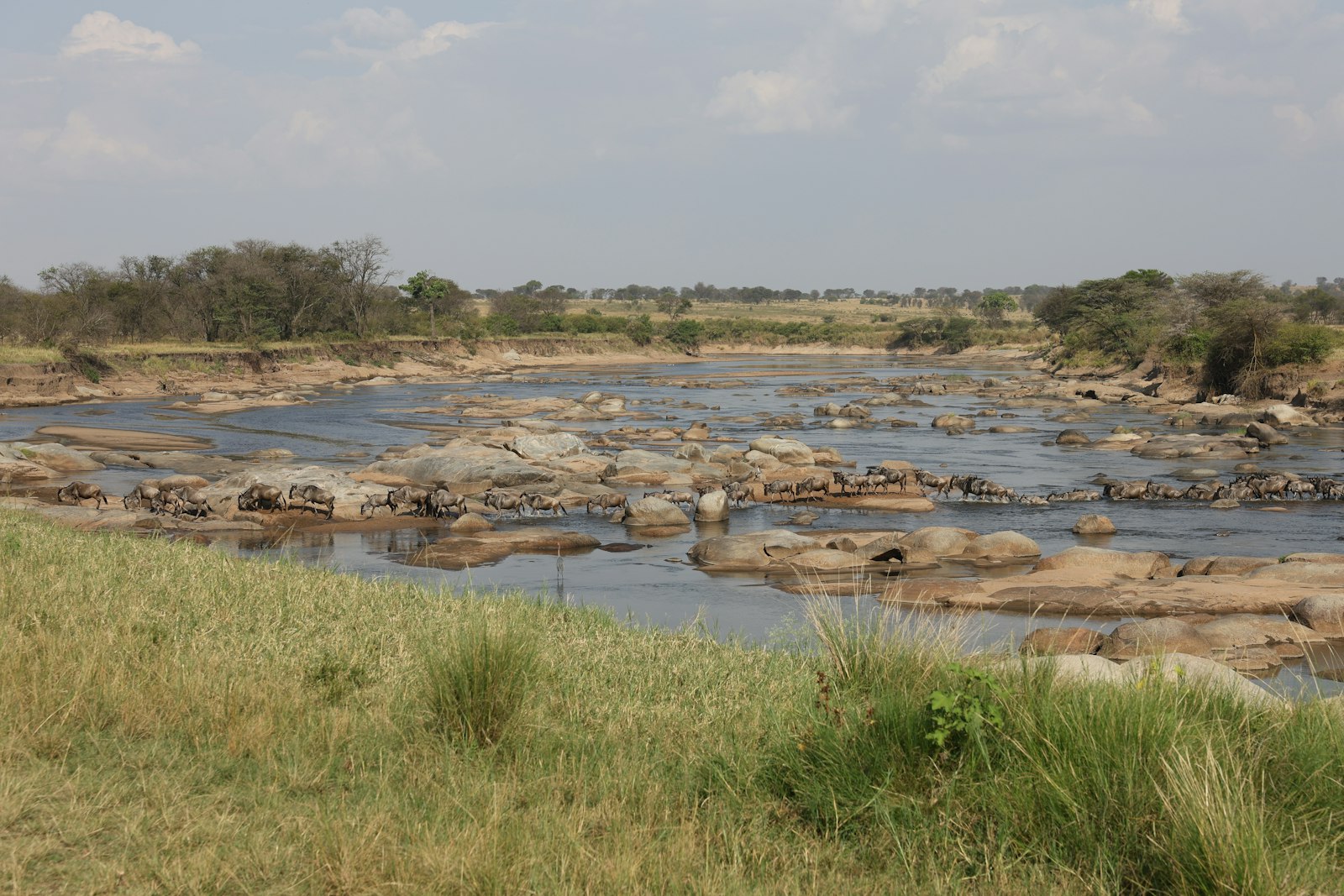
There are a number of well-known crossing points along this stretch, each with its own character: some with steep banks and deep water where crocodiles gather, others wide and shallow where the herds can pour across for an hour or more. Which point is active changes from day to day, and sometimes from hour to hour, depending on where the herds are grazing and what spooks or encourages them.
The Serengeti's northern section is generally quieter than Kenya's Masai Mara on the other side of the border, with fewer vehicles at most sightings. Our Serengeti vs Masai Mara comparison sets out the differences, and our Grand East Africa Journeys combine both sides.
What a crossing day is really like
Most of a crossing day is spent waiting, and the waiting is part of the experience.
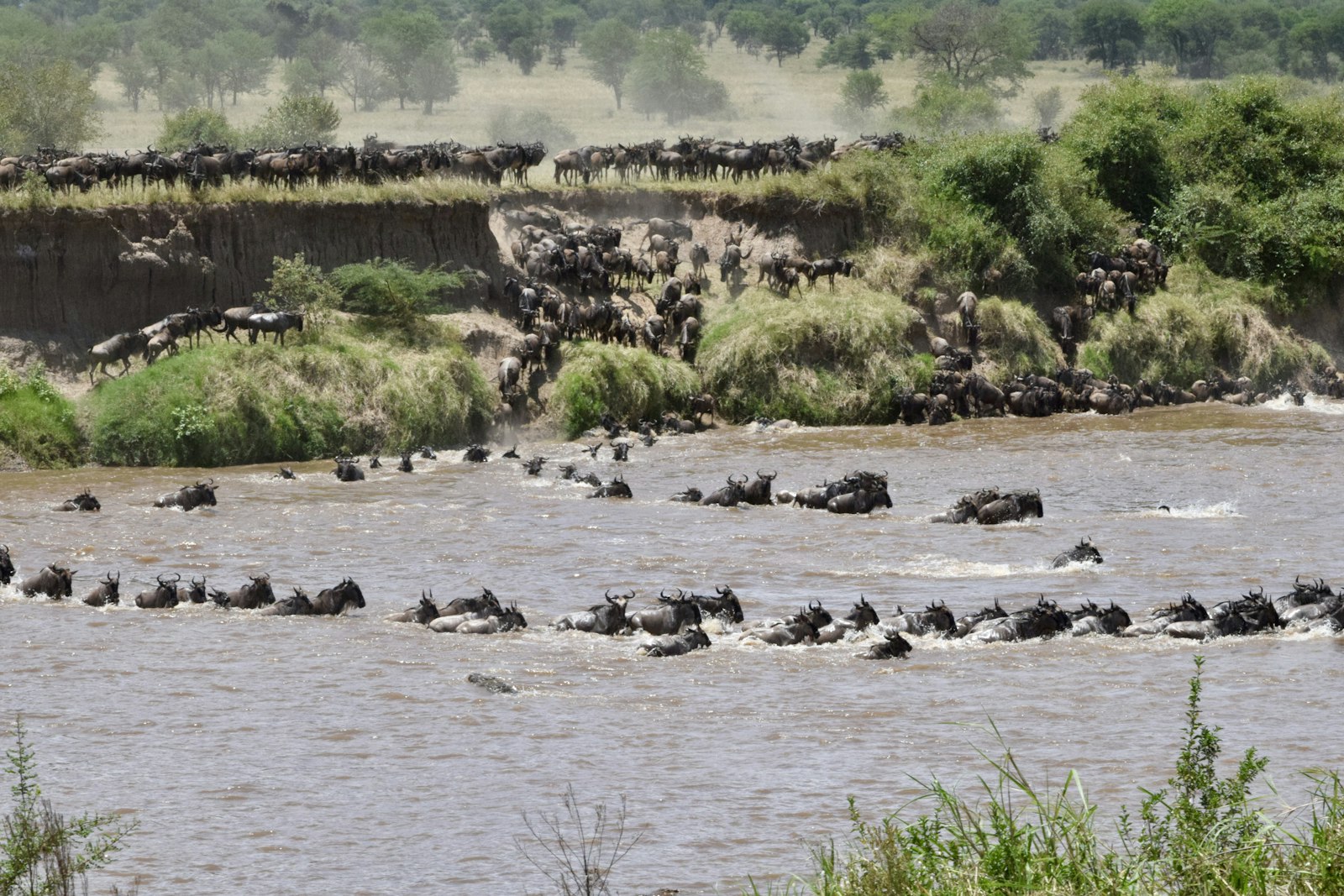
Early morning. We leave camp at first light and drive along the river, looking for herds massing near the bank. Your guide reads the signs: wildebeest bunching together, zebras moving to the front, animals walking down to the water and back again.
The build-up. When a herd gathers above a crossing point, we stop at a respectful distance and wait, engine off. This can take minutes or hours. Many times the herd turns away and the build-up begins somewhere else.
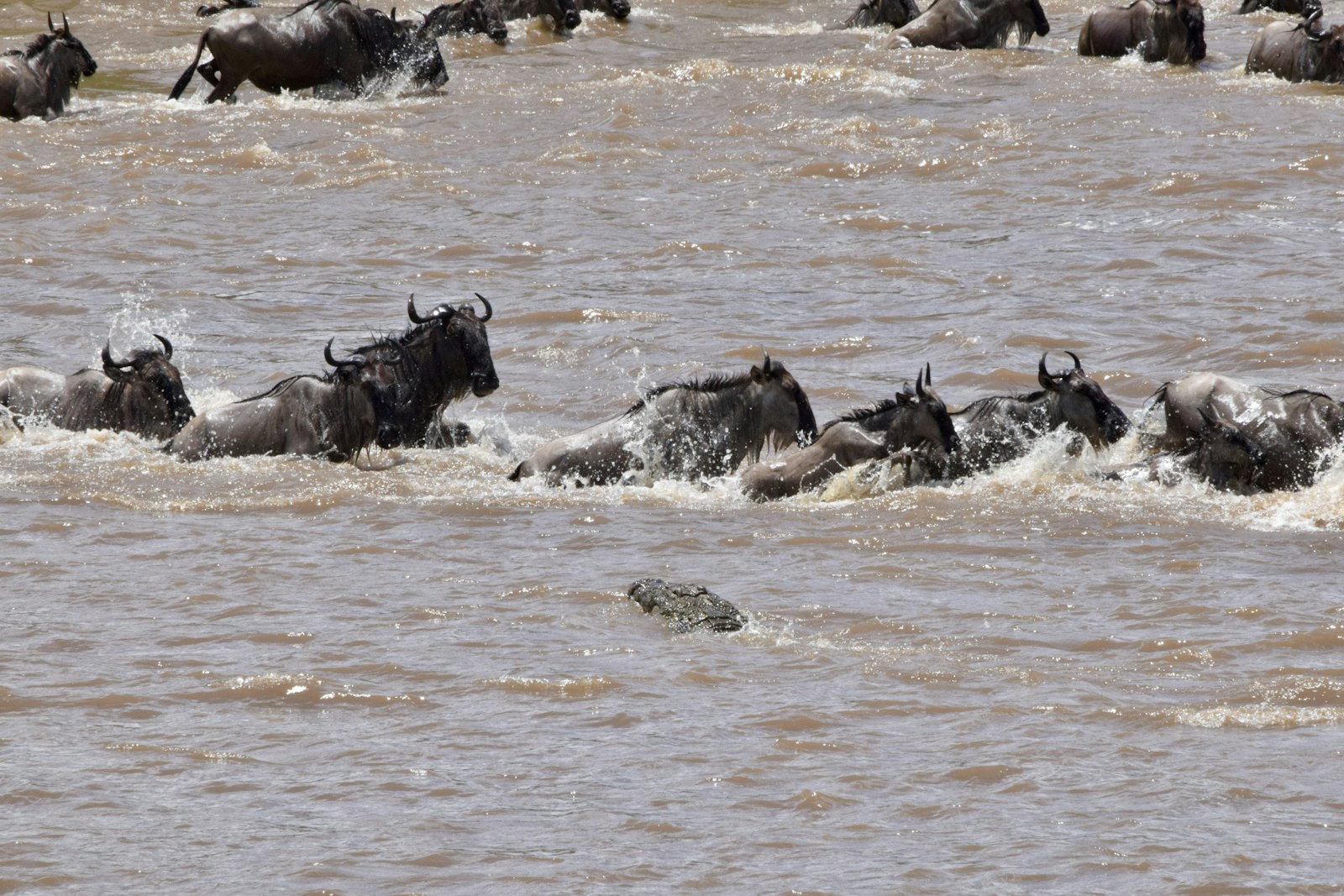
The crossing. When the first animal commits, the rest follow in a rush of dust, noise and water. A crossing may last a few minutes or keep going for well over an hour. Crocodiles take some animals, and others struggle on the far bank, which can be hard to watch. Your guide will talk you through what is happening.
The rest of the day. Between crossings, the northern Serengeti offers excellent game in its own right: lions and other predators following the herds, elephants, giraffes and the open plains of the Lamai Wedge. Most guests take a picnic lunch so they do not have to leave the river.
Why patience and distance matter
Herds are easily startled. If vehicles crowd the bank or block a route down to the water, the animals often turn back, and the crossing never happens. Park rules require vehicles to wait back from the crossing points, and good guides go further, leaving the herd room to make its own decision. A private vehicle lets you wait quietly for as long as it takes, which is the single biggest factor in seeing a crossing well. See our guide to private vs group safaris for why this matters.
Where to stay for the river crossings
Being close to the river matters more in crossing season than at any other time, because a crossing can begin and end while you are still on the road. These are the camps we use most for the Mara River:
Camp | Location | Comfort level | Why we choose it |
|---|---|---|---|
Near the Mara River, far northern Serengeti | Ultra-Luxury | Positioned for the crossings, with genuine comfort after long days at the river | |
On the banks of the Mara River in the Lamai area | Ultra-Luxury | An intimate camp with exceptional service, right on the river | |
On the Mara River, Kogatende and Lamai | Ultra-Luxury | A top-tier camp with easy access to the crossing points | |
The Lamai Wedge, northern Serengeti | Ultra-Luxury | Hillside views over the north and quick access to the river |
For Classic and Mid-Luxury safaris, seasonal mobile camps move to the northern Serengeti for the crossing season, and we choose the one best placed for your dates each year. The camps closest to the river fill first, often a year ahead. Explore all the properties we work with in our lodges and camps collection.
How we plan a river-crossing safari
This is the route we suggest most often for an 8-day private crossing safari:
Day 1: Arrive in Arusha and rest.
Day 2: Tarangire National Park, among the dry-season elephants.
Day 3: Ngorongoro Crater at first light, then on to the central Serengeti.
Day 4: A full day in the central Serengeti for big cats along the Seronera River.
Day 5: Fly or drive north to the Mara River.
Days 6 and 7: Two full days at the river and on the plains of the Lamai Wedge.
Day 8: A final morning by the river, then fly from Kogatende to Arusha, or on to Zanzibar.
With less time, you can fly directly from Arusha to Kogatende and spend three or four nights by the river. Our guide to how many days you need compares routes from 3 to 10 days, and the 9-Day Luxury Safari and 10-Day Classic Tanzania Safari can both be shaped around the crossings. To add Kenya's Masai Mara, see our 10-day Kenya, Tanzania and Zanzibar safari.
What a river-crossing safari costs
July to October is peak season, and the camps closest to the river are among the finest in Tanzania. Our private safaris are priced per adult per day by comfort level:
Length | Classic | Mid-Luxury | Luxury | Ultra-Luxury |
|---|---|---|---|---|
6 days | US$2,100–2,700 | US$2,700–3,300 | US$3,600–4,500 | From US$4,800 |
8 days | US$2,800–3,600 | US$3,600–4,400 | US$4,800–6,000 | From US$6,400 |
10 days | US$3,500–4,500 | US$4,500–5,500 | US$6,000–7,500 | From US$8,000 |
Prices are per adult, sharing, for a private safari, including park fees, accommodation, meals, your vehicle and guide. Children under 11 travel at 40% off the adult rate. Light-aircraft flights to and from the north are quoted separately, and on most crossing safaris they save a long day on the road. Our guide to Tanzania safari costs explains park fees and what is included.
The honest trade-offs
No one can guarantee a crossing. Three nights by the river gives most guests a good chance, but some herds simply refuse to cross on a given day. Anyone who promises a crossing on a specific date is promising something no one controls.
It is peak season. July to October is the busiest and highest-priced time in the Serengeti, and the best river camps fill early.
Popular crossings attract vehicles. The Tanzanian side is generally quieter than Kenya's, but a big crossing can still draw a crowd. Early starts help.
It is dusty and dry. The northern plains are dry by August. Pack a buff or scarf and protect your camera.
It can be hard to watch. Crocodile kills, drownings and injured animals are part of the crossings. Many guests find it moving; some find it upsetting.
It is not the only spectacle. If you want vast herds and newborn calves without the uncertainty, the calving season is often more reliable. See our guide to calving season in Ndutu.
River crossings vs calving season
River crossings | Calving season | |
|---|---|---|
When | July to October | January to March, peak in February |
Where | Northern Serengeti: Kogatende and the Lamai Wedge | Southern Serengeti and Ndutu |
The spectacle | Short, intense crossings after long waits | Vast herds, newborn calves and constant predator action |
Landscape | Dry, golden plains and the river | Green, open short-grass plains |
Predictability | Herds are near the river, but crossings are never guaranteed | Herds are usually on the plains, so action is easier to find |
Pairs well with | Tarangire, Ngorongoro and Kenya's Masai Mara | Ngorongoro and Zanzibar |
Photography tips for the crossings
Bring a long lens and a wider one. A 100–400 mm zoom for the action and a wider lens for the scale of the herd.
Use a fast shutter speed. At least 1/1000s freezes water and movement. Burst mode helps.
Steady your camera with a beanbag on the vehicle's window frame, and stay seated so the vehicle stays still.
Protect your gear from dust with a cover or a pillowcase between sightings.
Put the camera down for a moment. Many guests tell us the crossing they remember best is the one they simply watched.
Before you go
Pack neutral, breathable layers, a warm fleece for early mornings, a scarf or buff for dust, a hat, sunglasses, high-factor sun cream and binoculars. Read our guide to safety in Tanzania for the new mandatory entry insurance and health preparation, including malaria.
Field notes: the crossing that did not happen
Some of our best days at the river have had no crossing at all. A herd gathers, edges down to the water, then turns away, and the guests are disappointed for a moment. Then a lioness walks out of the grass behind them, or the herd tries again an hour later at a crossing point no one was watching. The river rewards the people who stay.
Planned in Arusha, guided by the same team
Emnel Adventures was founded in Arusha in 2016. The people who plan your safari are the same team who look after you on the ground, so the camp we suggest for your dates is based on where the herds have actually been crossing. Explore our Great Migration safaris, see more of the Serengeti, compare Tanzania and Kenya, or meet the team on our About page.
What our guests say
“Nelson’s knowledge and guidance regarding locations and accommodation really pulled the itinerary together. He worked really hard to put together a trip which suited us as a family of 4. … There is no doubt that the real success of the trip was down to our fantastic guides Gabriel and Abasai.”
— Melanie W, family of four, 8-Day Tanzania Family Safari
How we keep this guide current
We review this guide each year after the crossing season with our guides, noting when the first crossings began, which crossing points were most active and which camps were best placed. Last reviewed: November 2026.
Frequently asked questions
When is the best time to see the Mara River crossings?
From July to October, with August and September often the most reliable months. The herds follow the rain, so the timing shifts a little each year.
Where are the river crossings in Tanzania?
In the far northern Serengeti, along the Mara River around Kogatende and the Lamai Wedge, close to the border with Kenya.
Is a river crossing guaranteed?
No. No one can predict when a herd will cross. Spending at least three nights near the river and having a private vehicle that can wait as long as it takes gives you the best chance.
How long does a river crossing last?
Anything from a few minutes to well over an hour. The waiting beforehand often takes much longer.
Is it better to see the crossings in Tanzania or Kenya?
Both sides of the river see crossings. The Tanzanian side is generally quieter, with fewer vehicles at most sightings, while Kenya's Masai Mara is more accessible and busier. Many travellers combine both.
How many nights do I need near the Mara River?
At least three nights, ideally at a camp close to the river, to give yourself several chances at a crossing.
Can children watch the river crossings?
Yes, though crossings can include crocodile kills and drownings. Your guide will help you decide what to watch, and the long waits suit older children better than very young ones.
When should I book a river-crossing safari?
Nine to twelve months ahead for July to September, when the camps closest to the river fill first.
Plan your river-crossing safari
Tell us when you would like to travel and who is coming, and we will reply within 24 hours with a personal route, the camps closest to the river for your dates and an indicative price. Every journey is planned in Arusha and guided by the team who will be with you on the ground.
Prefer to talk it through first? Contact our team in Arusha.