
Nelson Laizer, Founder & Travel Designer
Calving Season in Ndutu: A Guide to the Serengeti's January–March Migration (2027)
When and where to see the Serengeti calving season in Ndutu: timing month by month, what you will see, predators, where to stay, a sample 6-day route, costs and honest trade-offs, from the team who guide it every year.

Reviewed November 2026 by the Emnel team in Arusha.
The short answer: The Serengeti calving season runs from about January to March, with a peak usually in February, when the Great Migration herds gather on the short-grass plains of Ndutu and the southern Serengeti. Up to around 500,000 wildebeest calves are born each season, as many as 8,000 in a single day at the peak, and most within a window of about three weeks. Lions, cheetahs and hyenas follow the herds, making it one of the most dramatic times to be on safari in Africa. To see it well, plan at least three nights near Ndutu and book 9 to 12 months ahead.
Most people picture the Great Migration as river crossings in the north. Many of our guides would quietly tell you that calving season is the better show: the herds are vast and close, the plains are green after the short rains, and there is rarely an hour without something happening. This guide explains when and where it happens, what you will see, where to stay and how we plan a calving safari, from the team who guide it every year.
What is the calving season?
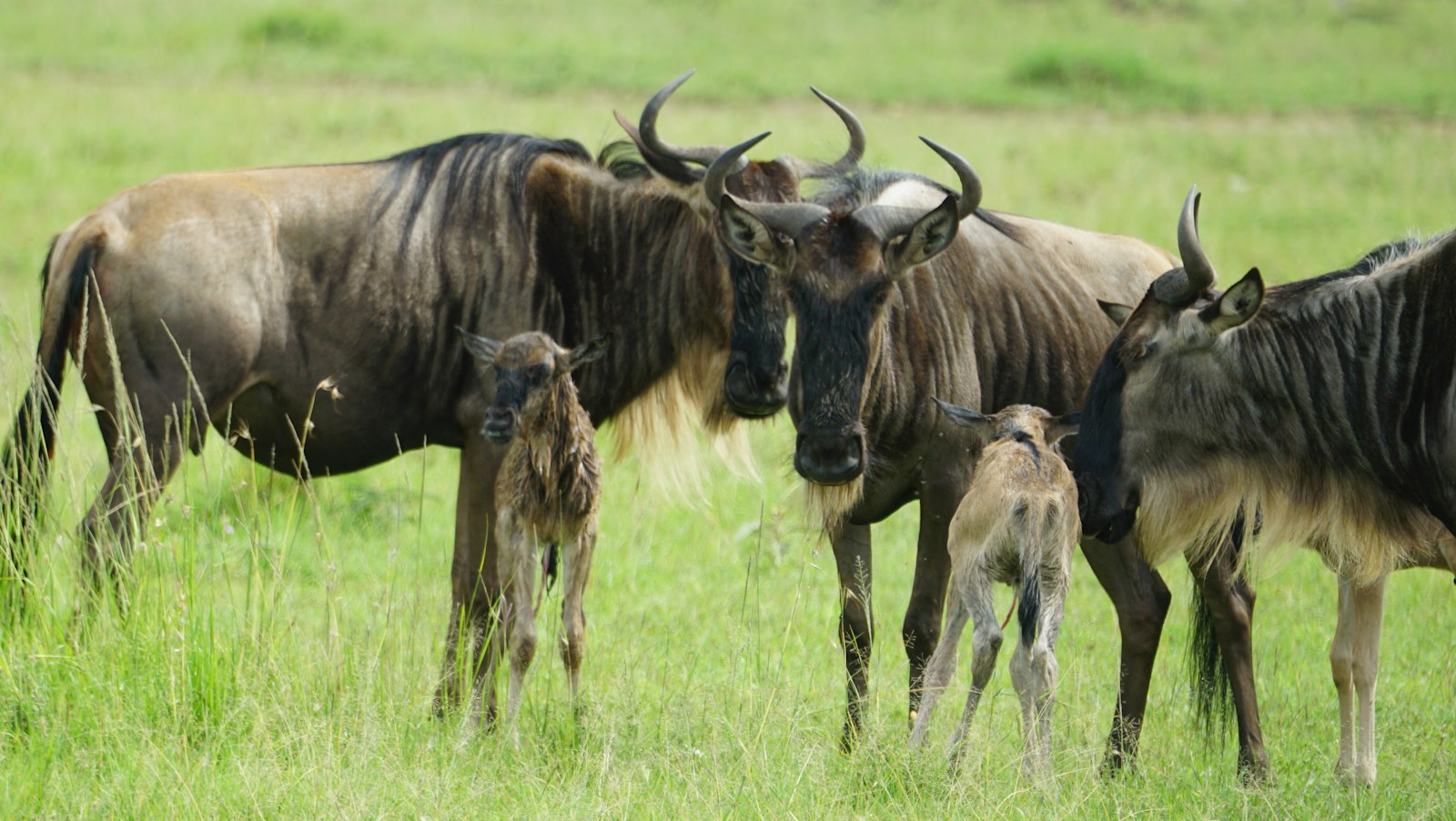
Every year, after the short rains of November and December, the migration herds of around 1.5 million wildebeest move south onto the short-grass plains that stretch from the southern Serengeti into the Ngorongoro Conservation Area. These volcanic soils grow grass rich in calcium and magnesium, ideal for mothers producing milk, and the open landscape makes it harder for predators to approach unseen.
Here the wildebeest give birth in a remarkably synchronised burst. Calves can stand within minutes and run alongside their mothers soon afterwards. By giving birth together, the herds overwhelm the predators: there are simply too many calves for the lions, cheetahs and hyenas to take.
When is the calving season?
Calving follows the rain rather than the calendar, so the timing shifts a little each year. This is the pattern our guides plan around:
Month | What usually happens | How it feels to be there |
|---|---|---|
December | Herds arrive on the southern plains after the short rains | Green, quieter, the herds building |
January | Large herds settle around Ndutu; calving begins | Excellent game, growing numbers of calves |
February | The peak: most calves born within about three weeks | The most action, and the busiest month around Ndutu |
March | Late births; herds begin to drift north and west as the long rains approach | Fewer vehicles, more rain, young calves everywhere |
For the full year-round picture, see our month-by-month Great Migration guide and our guide to the best time for a Tanzania safari.
Thinking of travelling for the calving? Tell us your dates and we will suggest the camps closest to where the herds are likely to be. We reply within 24 hours. Plan my safari
Where does the calving happen?
The heart of the calving is the area around Ndutu, named after Lake Ndutu and its neighbour Lake Masek. Ndutu sits inside the Ngorongoro Conservation Area, right on the southern edge of the Serengeti, so the herds move freely across a boundary that exists only on maps. The calving grounds extend across the short-grass plains of the southern Serengeti, including the area towards Kusini and the edges of the Gol Mountains.
Because Ndutu lies within the Ngorongoro Conservation Area, Ngorongoro conservation fees apply when you stay there, and Serengeti fees apply when you cross into the national park. We include all of these in your quote. Our guide to Tanzania safari costs explains how park fees work.
Exactly where the herds gather changes from week to week with the rain. This is why a guide who has been on the plains recently, and a camp in the right place, matter more in calving season than at any other time of year.
What you will see
Births on the open plains
Most births happen in the morning. With patience, many guests watch a calf born and take its first steps within minutes. It is one of the most moving sights in the natural world, and a private vehicle lets you wait quietly at a respectful distance for as long as it takes.
Predators at work
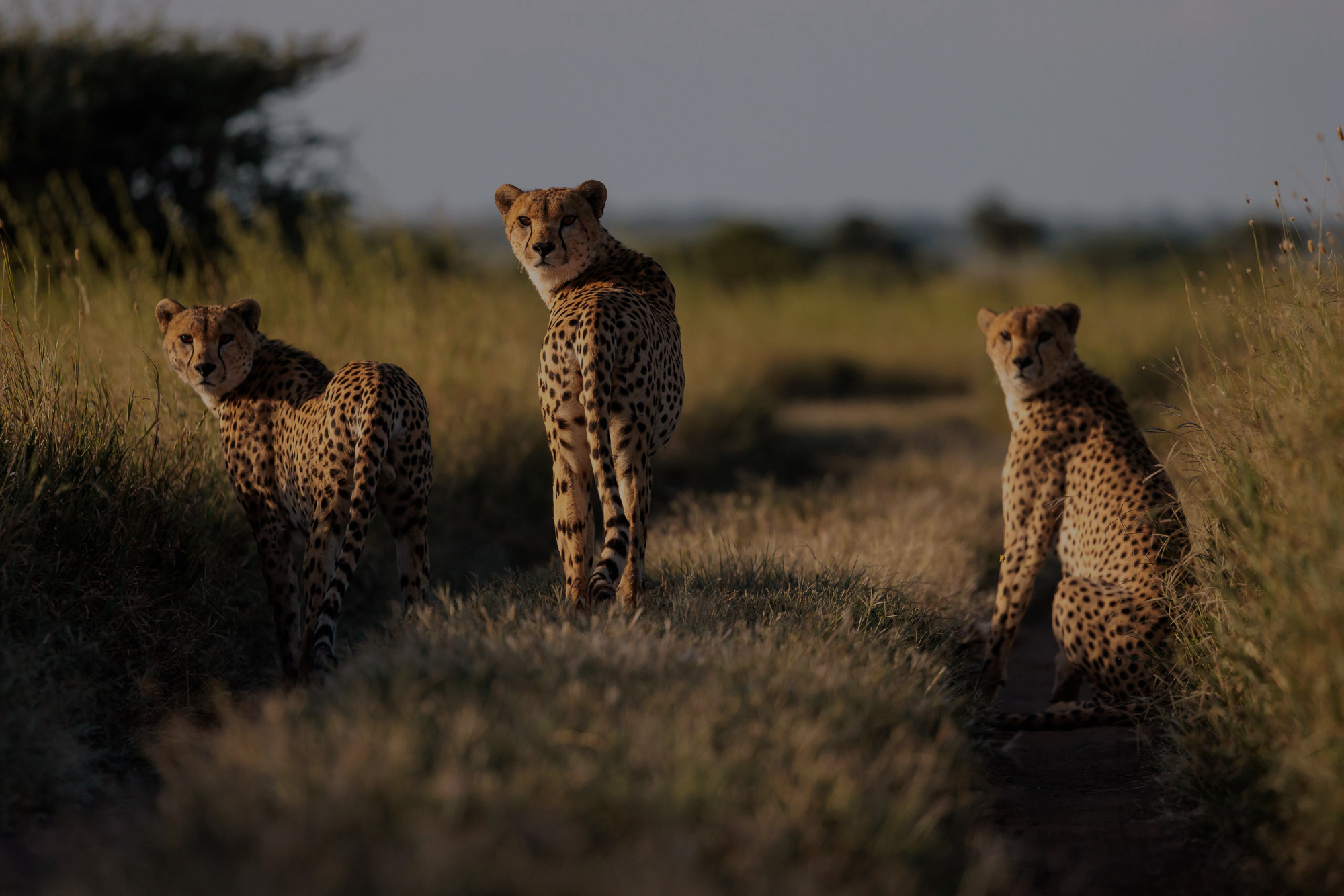
Calving season is one of the best times in Tanzania to see predators hunting. The open plains suit cheetahs especially well, and Ndutu is known for them. Lions and spotted hyenas are never far from the herds, and you may also see jackals, servals and other smaller predators. Hunts are part of the season, and your guide will always talk you through what you are seeing.
More than wildebeest
Zebras and gazelles move with the herds, the plains fill with migratory birds from Europe and Asia, and the woodland around the lakes holds giraffes, elephants and the resident wildlife of the area.
A day in Ndutu
We leave camp at first light with coffee and a packed breakfast, because the plains are busiest early. Your guide reads the herds: where they are grazing, where they look restless, where the predators have been seen. Some mornings are spent watching a single herd for hours; others follow a cheetah as she moves into position. Breakfast is taken in the open, with the herds around you. In the heat of the day, many guests return to camp to rest, then head out again in the softer afternoon light, before the drive back to camp at sunset.
Where to stay for the calving season
Being close to the herds is everything in calving season, because every hour you spend driving to them is an hour not spent watching them. There are two main ways to stay:
Permanent lodges and camps around Ndutu, which sit near the calving grounds all year and offer solid walls or spacious tents.
Seasonal mobile camps, which move to the southern plains from around December to March to stay close to the herds. They offer an authentic tented experience, with many at Luxury level.
The best-located camps for February fill early, often a year in advance. We hand-pick the camp for your dates based on where the herds have been gathering, and you can explore the properties we work with in our lodges and camps collection.
How we plan a calving safari
This is the route we suggest most often for a 6-day private calving safari:
Day 1: Arrive in Arusha and rest, or drive to the Ngorongoro highlands.
Day 2: Descend into Ngorongoro Crater at first light, then continue to Ndutu in the afternoon.
Days 3 and 4: Two full days with the herds on the calving grounds.
Day 5: A final morning on the plains, then drive north to the central Serengeti for big cats along the Seronera River.
Day 6: A morning game drive, then fly back to Arusha, or on to Zanzibar.
With more time, we add a night in Tarangire or Lake Manyara at the start, or extra nights in the central Serengeti. Our guide to how many days you need compares routes from 3 to 10 days, and the 7-Day Serengeti Safari & Zanzibar is easily shaped around the calving.
What a calving safari costs
January and February are high season, so the best camps are at their peak rates. Our private safaris are priced per adult per day by comfort level:
Length | Classic | Mid-Luxury | Luxury | Ultra-Luxury |
|---|---|---|---|---|
5 days | US$1,750–2,250 | US$2,250–2,750 | US$3,000–3,750 | From US$4,000 |
6 days | US$2,100–2,700 | US$2,700–3,300 | US$3,600–4,500 | From US$4,800 |
7 days | US$2,450–3,150 | US$3,150–3,850 | US$4,200–5,250 | From US$5,600 |
Prices are per adult, sharing, for a private safari, including park fees, accommodation, meals, your vehicle and guide. Children under 11 travel at 40% off the adult rate. Light-aircraft flights are quoted separately when your route includes them.
The honest trade-offs
The herds follow the rain. In most years they are on the southern plains in February, but an unusual rainy season can move them. A flexible private safari and a well-placed camp are your best insurance.
Ndutu can be busy at the peak. Popular sightings attract vehicles in February. Early starts and an experienced guide help you find quieter herds.
Showers are possible. Short afternoon rains can fall, and tracks can turn muddy. They rarely last long.
Middays are hot. The open plains have little shade, so most guests rest at camp in the middle of the day.
It is not the river crossings. If the Mara River crossings are your dream, plan for July to October in the northern Serengeti instead.
Photography tips for calving season
Go out early. Most births and hunts happen in the cool of the morning, in the best light.
Bring a long lens. A 100–400 mm or similar zoom lets you keep a respectful distance from mothers and newborns.
Use a beanbag. It steadies your lens on the vehicle's window frame far better than a tripod.
Be patient. The best images come from staying with one herd, which is exactly what a private vehicle allows. See our guide to private vs group safaris.
What to pack
Pack light, breathable layers in neutral colours, a warm fleece for early mornings and the Ngorongoro highlands, a light rain jacket, a wide-brimmed hat, sunglasses and high-factor sun cream. Binoculars make a real difference on the open plains. Before you travel, read our guide to safety in Tanzania for the new entry insurance and health preparation, including malaria.
Adding Zanzibar
January and February are among the best months on Zanzibar, hot and mostly dry, so the calving season pairs beautifully with a few nights on the coast. Light aircraft fly from the Serengeti to Zanzibar, usually via Arusha. See our Tanzania safari and Zanzibar journeys.
Field notes: what calving season teaches
Guests often come for the drama, the predators and the chase. What stays with them is quieter: a newborn calf finding its feet a few minutes after birth, and the whole herd moving on together across the green plains. You do not need to rush in calving season. The plains come to you.
Planned in Arusha, guided by the same team
Emnel Adventures was founded in Arusha in 2016. The people who plan your safari are the same team who look after you on the ground, so when we suggest a camp for your dates, it is based on where the herds have actually been gathering. Explore our Great Migration safaris, see what is possible in the Serengeti and Ngorongoro, or meet the team on our About page.
What our guests say
“We had the most amazing experience booking our honeymoon safari through Nelson, and couldn’t recommend him enough! … He even met us at the airport after our safari to see how everything had gone. We also have to give a special mention to our safari guide, Joachim, who was absolutely incredible!”
— Gemma E, honeymoon couple, 10-Day Tanzania Honeymoon Safari & Zanzibar
How we keep this guide current
We review this guide each year with our guides after the calving season, noting where the herds gathered, when the peak fell and which camps were best placed. Last reviewed: November 2026.
Frequently asked questions
When is the Serengeti calving season?
From about January to March, with a peak usually in February, when most wildebeest calves are born within about three weeks. The timing shifts a little each year with the rains.
Where is the best place to see the calving?
The short-grass plains around Ndutu and the southern Serengeti. Ndutu lies inside the Ngorongoro Conservation Area, on the Serengeti's southern edge.
How many wildebeest calves are born?
Up to around 500,000 each season, with as many as 8,000 born in a single day at the peak.
Is calving season better than the river crossings?
They are different. Calving season offers vast herds, newborn calves and excellent predator action on open, green plains. The river crossings, from July to October, are short and dramatic. Many of our guides prefer calving season for the sheer amount of action.
How many days do I need for the calving season?
At least five or six days, with three nights near Ndutu. That gives you two full days on the calving grounds plus Ngorongoro Crater.
Is February a good time for a family safari?
Yes. February half-term falls at the peak of calving, and the young animals fascinate children. The predator action can be intense, so your guide will help you choose what to watch.
When should I book a calving safari?
Nine to twelve months ahead for February, when the best-placed camps fill first. January and March have a little more availability.
Plan your calving safari
Tell us when you would like to travel and who is coming, and we will reply within 24 hours with a personal route, the camps closest to the herds for your dates, and an indicative price. Every journey is planned in Arusha and guided by the team who will be with you on the ground.
Prefer to talk it through first? Contact our team in Arusha.