
Experiences
What do you want to experience?
Safari, Kilimanjaro or Zanzibar beach — start from the experience and we'll match the right trip.
Classic Northern Circuit
The classic northern circuit is the route most first-time visitors picture when they imagine a Tanzania safari — Tarangire, Lake Manyara, the Serengeti and the Ngorongoro Crater, linked by manageable drives and served by reliable lodges and camps. This category covers our private, mid-range safaris along that circuit, from a compact four days up to a full week or more. Tarangire opens with big elephant herds among baobabs; Lake Manyara adds groundwater forest and tree-climbing lions; the central Serengeti holds resident lion, leopard and cheetah year-round, independent of the migration; and the Ngorongoro Crater delivers one of the densest single days of game viewing anywhere in Africa, black rhino included. Every trip is private — your own vehicle and guide — and paced so that no day is a marathon of driving. It's the template we build most first Tanzania safaris around, and it pairs naturally with a Zanzibar beach extension.
Explore Classic Northern Circuit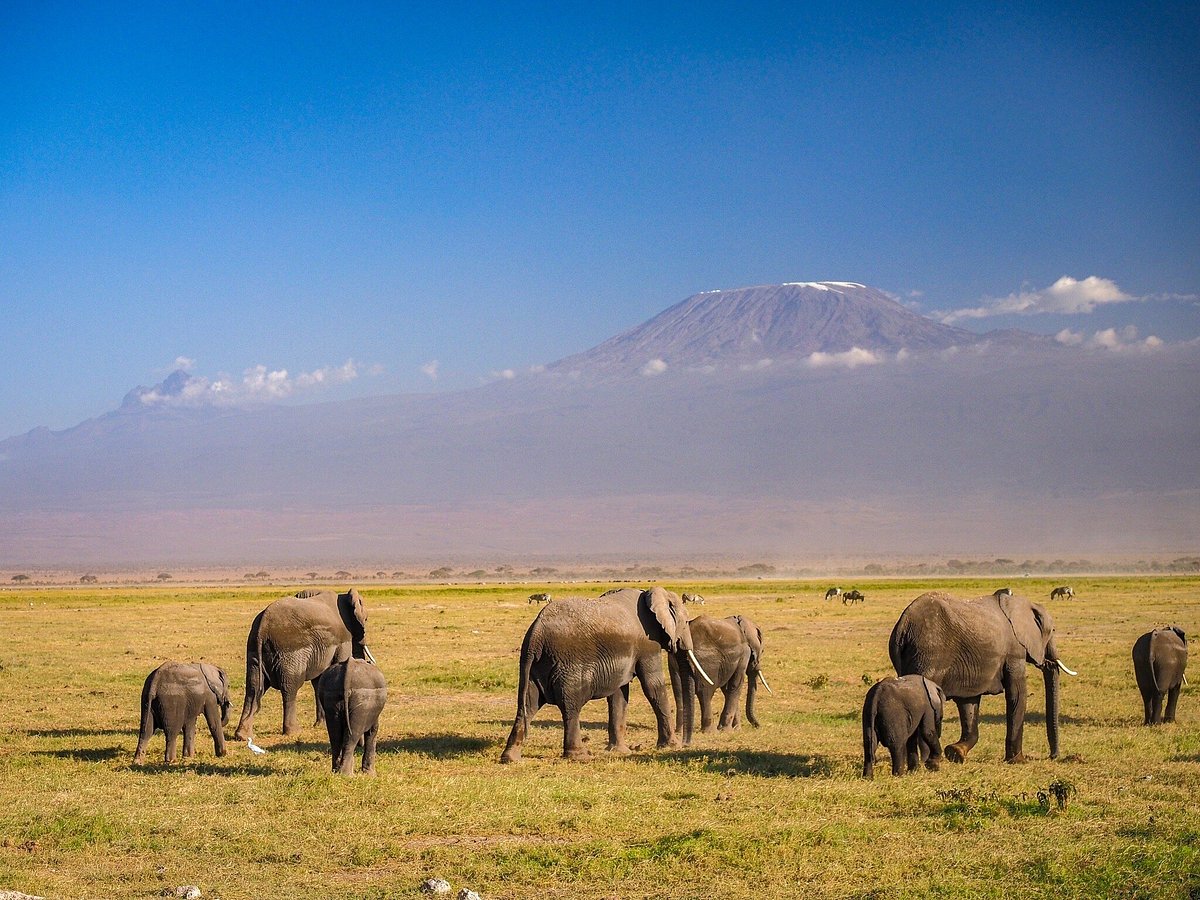
Tanzania Safari from Zanzibar
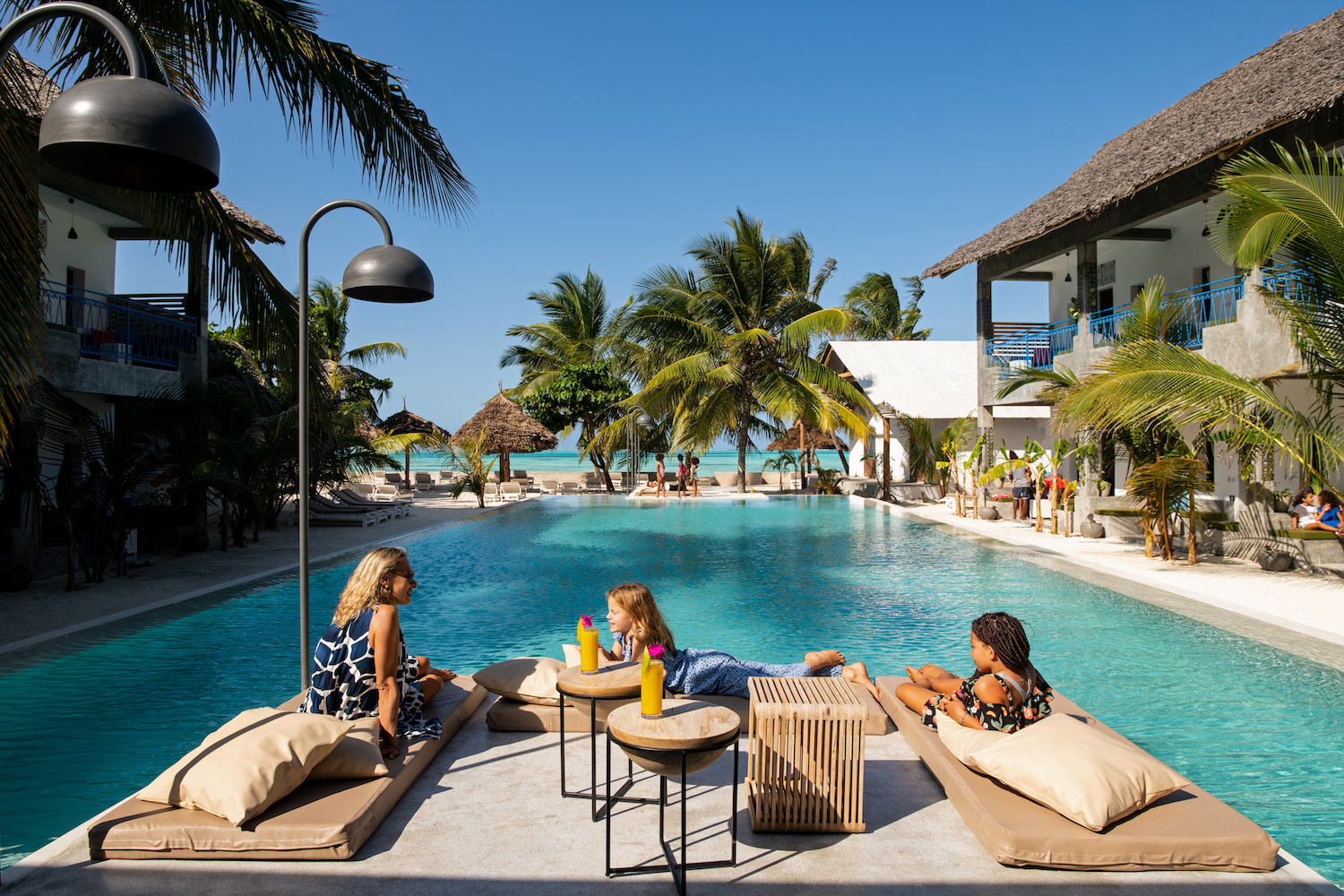
A Tanzania safari from Zanzibar is designed for travellers already on the island, or planning to start their trip there, who want to add the northern circuit's game parks without separately arranging flights and logistics. Zanzibar connects to the mainland safari circuit via short flights of roughly 45 minutes to an hour, landing at airstrips serving the Serengeti, Arusha or Kilimanjaro, which makes a beach-to-bush combination genuinely practical rather than a long-haul add-on. This category suits couples and families who've booked Zanzibar as their primary destination and are deciding whether three or four days of safari is worth the detour — in our experience, it almost always is, since Tarangire, Ngorongoro and the Serengeti offer something the coast simply doesn't. We typically recommend starting on safari and finishing on the beach, since travellers tend to want to unwind after early game-drive starts rather than the reverse. A well-planned itinerary from Zanzibar might cover four nights on the northern circuit — Tarangire and Ngorongoro, or Ngorongoro and Serengeti depending on time available — before returning to Zanzibar's coast for Stone Town, spice farm visits and beach time. Flight schedules and connection times matter more here than on a standard safari itinerary, since a missed onward flight can cost a full day, so we build in sensible buffers whenever we plan these routes.
Explore Tanzania Safari from Zanzibar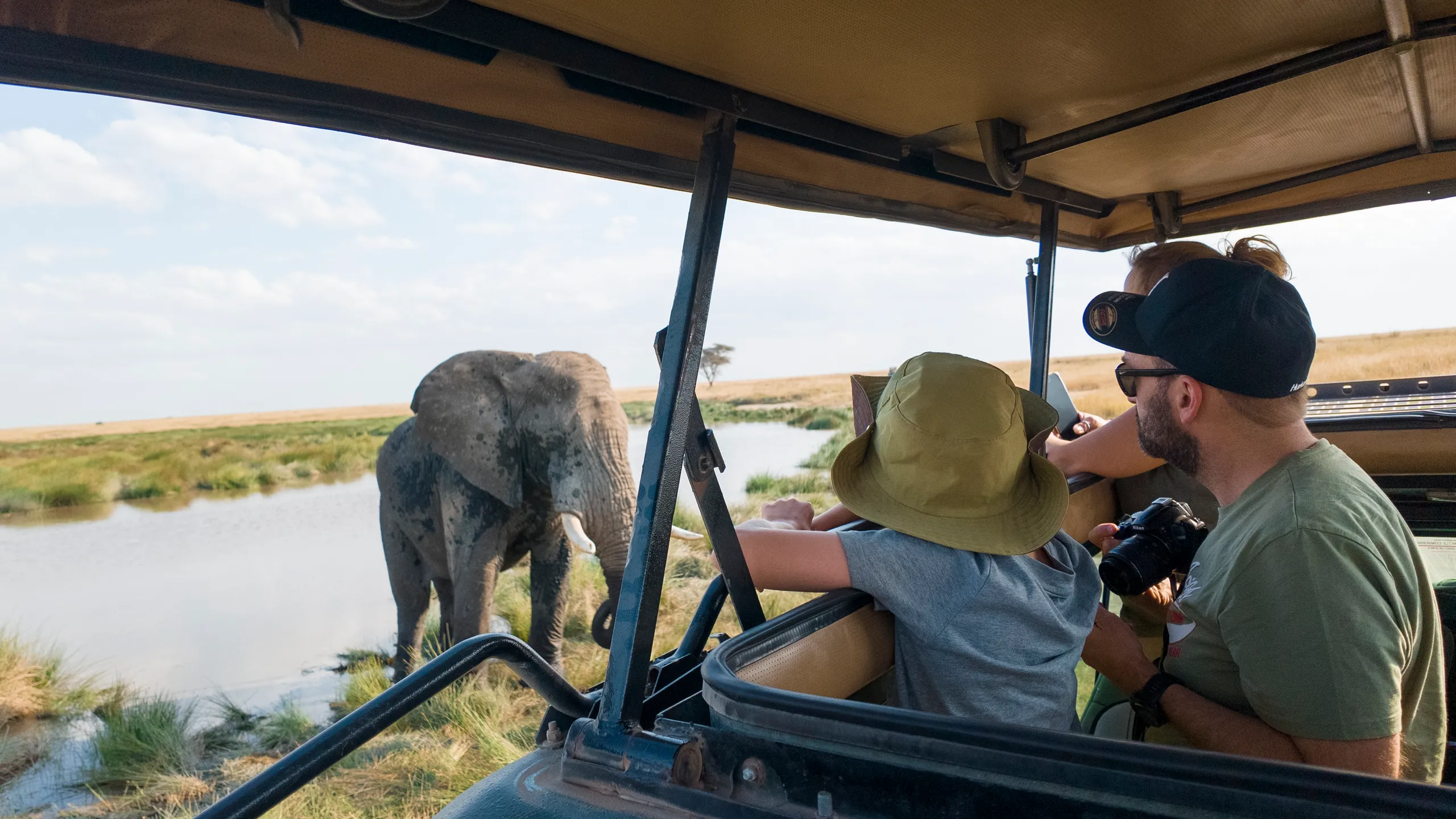
Tanzania Family Safaris
A Tanzania family safari brings parents, children and grandparents together on private game drives across the northern circuit, where wide-open plains and short driving distances between parks make the logistics manageable for younger travellers. This category is built around families who want their children to see elephants, lions and giraffe up close without sacrificing comfort or safety. Tarangire National Park, with its baobab-studded landscape and large elephant herds, is a natural favourite with kids, while Lake Manyara's compact size suits shorter game drives for younger children. The Ngorongoro Conservation Area, sitting above 2,000 metres, carries naturally lower malaria risk than lower-lying parks and offers dramatic crater views that hold older children's attention. Family lodges here typically offer interconnecting rooms or family tents, swimming pools, and guides experienced at pacing a day around nap times rather than a fixed checklist. We've planned trips for toddlers through to teenagers, and the itinerary that works best usually mixes shorter morning drives with free time at the lodge, in a private vehicle so you're never sharing a game drive with someone else's schedule. Many families extend their safari with a few days on Zanzibar's beaches, an easy addition by short flight from the northern parks. If you're weighing Tanzania against a neighbouring country for a family trip, the honest answer often comes down to driving time between sightings.
Explore Tanzania Family Safaris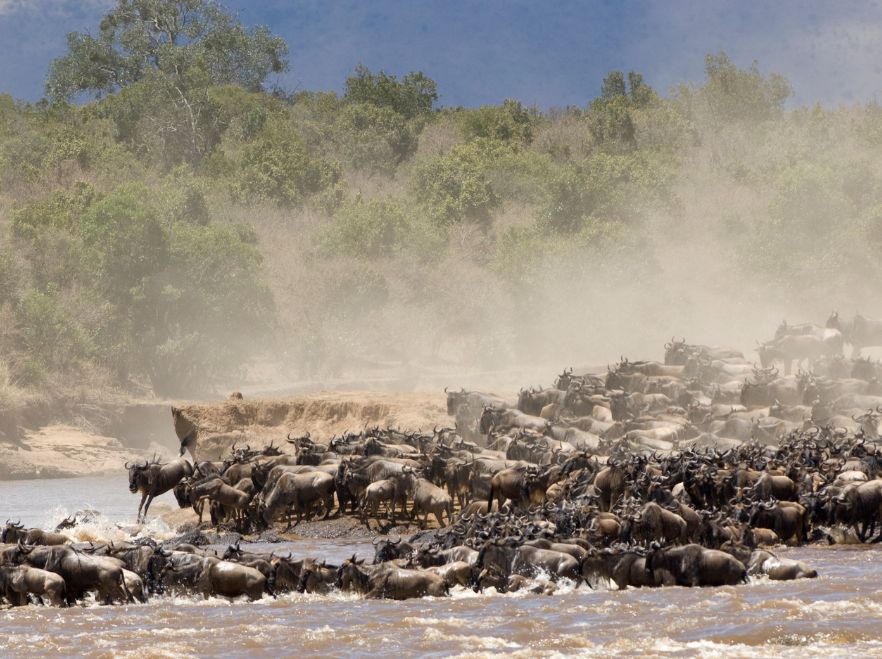
Great Migration Safaris
A Great Migration safari is built around following roughly 1.5 million wildebeest, alongside zebra and gazelle, as they move in a broadly clockwise loop through the Serengeti ecosystem in search of grazing and water. Where you should be depends on when you travel: December through March, the herds gather on the short-grass plains around Ndutu and southern Serengeti for calving season, drawing high concentrations of predators. By June and July they push into the western corridor, crossing the Grumeti River, before moving north toward the Mara River from roughly July to October, where the crossings most travellers picture are possible, though never guaranteed on any given day. This category suits wildlife enthusiasts and photographers who want a trip timed to a specific phase of the migration rather than a fixed set of parks, and who understand the herds move on their own schedule, not ours. We track migration movements through our guides in the field year-round, and we'll say plainly if a particular week isn't likely to deliver a river crossing — there's more value in positioning you correctly for calving season or predator action than promising a crossing we can't control. Camps along the migration route often relocate seasonally too. Pairing a migration-focused itinerary with the Ngorongoro Crater rounds out the trip with reliable Big Five viewing regardless of where the herds happen to be.
Explore Great Migration Safaris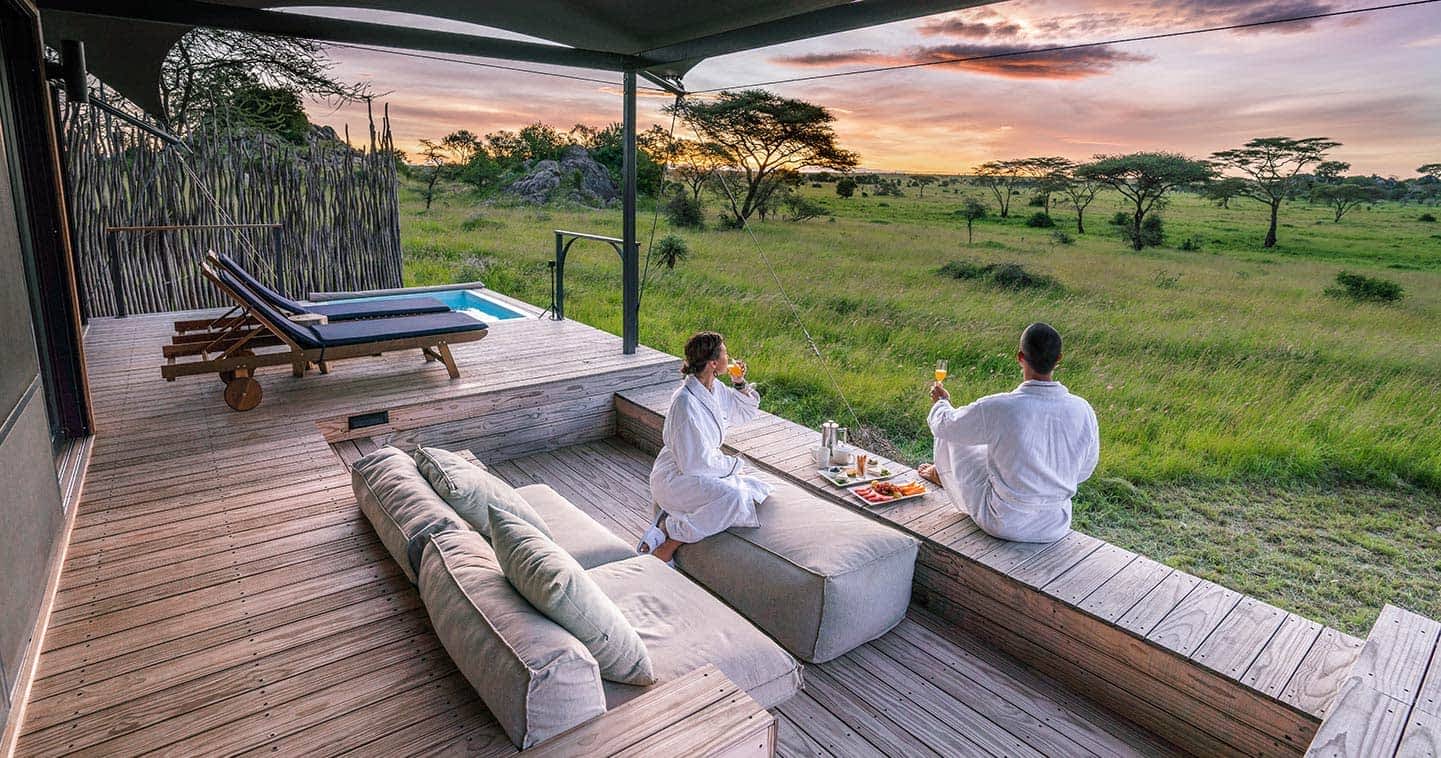
Luxury Tanzania Safaris
Luxury Tanzania safaris pair the country's best wildlife areas — the Serengeti, Ngorongoro Crater, Tarangire and private conservancies — with high-end camps, private guiding and service built around your preferences rather than a group schedule. This category is for travellers who want exceptional wildlife viewing without compromising on comfort: en-suite tented suites with private plunge pools, personal butlers, considered wine lists and bush dinners set beneath acacia trees. Luxury in the Tanzanian bush isn't about ostentation so much as thoughtful detail — a camp that remembers how you take your coffee, a guide who adjusts the day's plan around the light you want for photographs, a private vehicle so you're never queuing at a sighting alongside other trucks. Many of the country's most exclusive camps sit inside private concessions bordering the main parks, which allow off-road driving and night drives not permitted inside national park boundaries — a genuine advantage for serious wildlife viewing. Expect all-inclusive rates covering park fees, most drinks, laundry and often domestic flights between camps, which simplifies planning considerably. We work with a small number of owner-run luxury camps we've stayed in ourselves, rather than booking blind from a brochure, and we'll say honestly where a well-run mid-range camp will actually serve you better than a name-brand luxury property. A luxury safari here typically combines two or three properties over seven to ten days, often finished with a stay on Zanzibar.
Explore Luxury Tanzania Safaris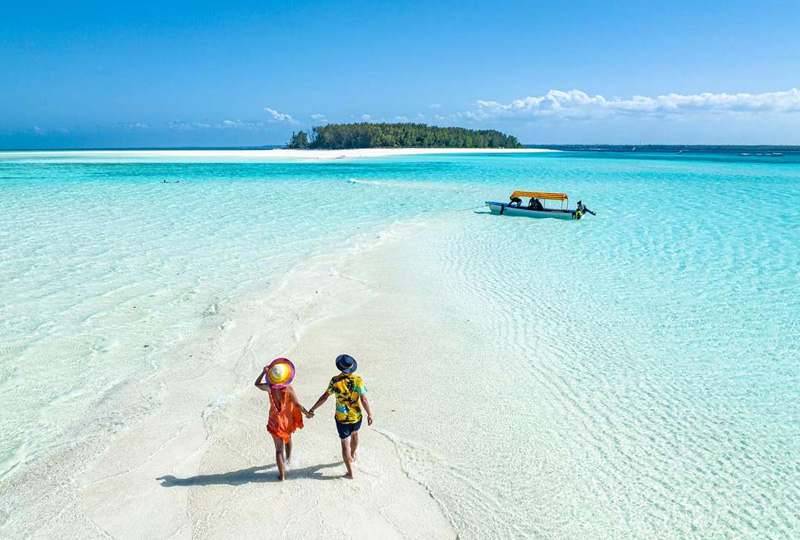
Honeymoon Safaris
A Tanzania honeymoon safari combines private game drives with the kind of quiet, personal touches suited to two people rather than a group — a private table for dinner under the stars, a plunge-pool suite overlooking the plains, a bush breakfast set up wherever the morning's sightings happen to take you. This category is built for couples, whether newly married or celebrating an anniversary, who want a safari that feels considered rather than scheduled. Camps favoured for honeymoons tend to be smaller, sometimes adults-only, and set in private concessions where you're less likely to share a sighting with other vehicles. Northern circuit properties around the Serengeti and Ngorongoro Crater are popular for their scenery and wildlife density, while a handful of camps in more remote areas trade a little accessibility for genuine privacy. Many couples extend the trip with several nights on Zanzibar, where the pace shifts from early wake-up calls to slow mornings on white sand — a natural complement to the safari's rhythm rather than a repeat of it. We ask honeymooning couples what they actually want from the trip, since preferences vary more than people expect: some want total seclusion and minimal wildlife-viewing pressure, others want to maximise sightings and don't mind an early alarm. Both are easy to plan for once we know which one describes you.
Explore Honeymoon Safaris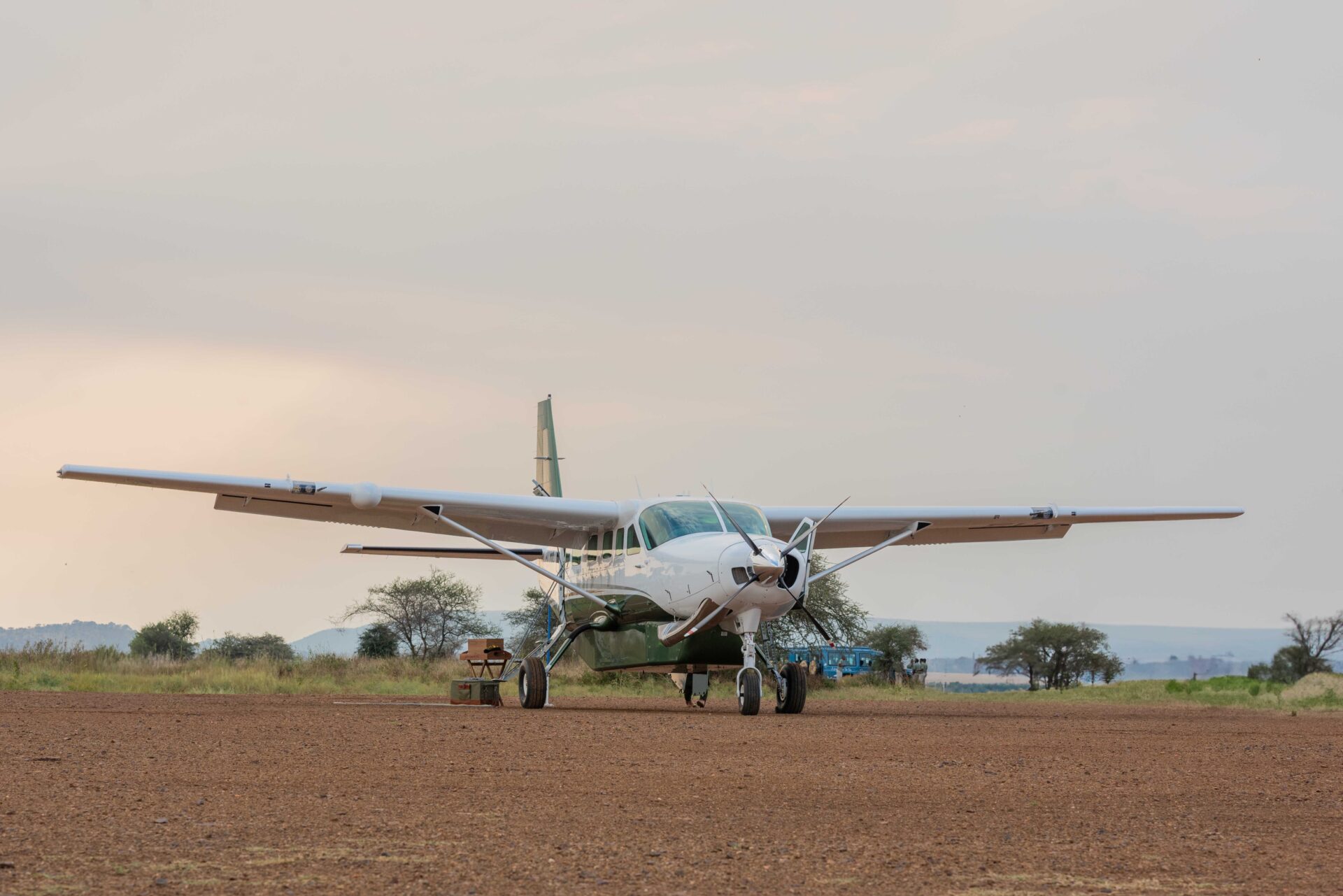
Fly-In Safaris
A fly-in safari uses scheduled light aircraft, rather than road transfers, to move between parks and camps, cutting what would be a seven- or eight-hour drive from Arusha to the Serengeti down to under an hour in the air. This category suits travellers short on time, uncomfortable with long stretches on unpaved roads, or heading to more remote areas such as private conservancies and southern circuit parks like Ruaha or Nyerere, where road access is impractical within a typical trip length. Domestic carriers such as Coastal Aviation and Auric Air run scheduled routes connecting Arusha and Kilimanjaro to airstrips at Seronera, Kogatende, Lake Manyara, Tarangire and beyond, usually on small 12- to 16-seat aircraft with luggage weight limits worth checking in advance. Flying between camps also means more time actually on safari rather than in transit, which matters if you've only got five or six days available. The trade-off is cost — flights add up compared with a road-based itinerary sharing a vehicle — but for many travellers the time saved and added comfort are worth it, particularly when combining several parks or adding on Zanzibar. We plan the flight schedule alongside the game-drive itinerary from the start, since arrival and departure times at each airstrip affect how much of a day you'll actually get on the ground.
Explore Fly-In Safaris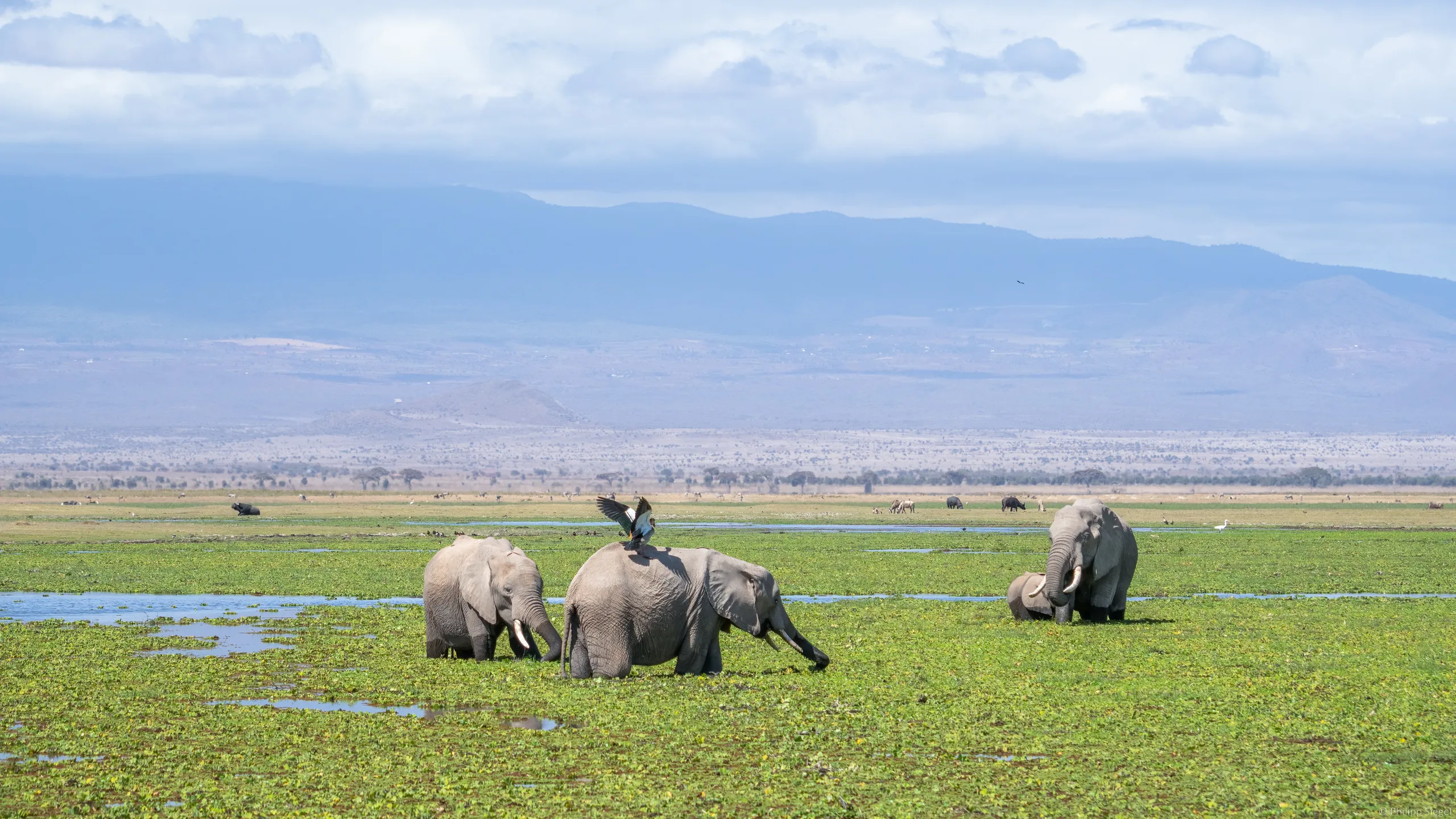
Photography Safaris
A Tanzania photography safari is planned around light, positioning and time in the field rather than a standard sightseeing pace — longer stays in fewer locations, dawn departures for first light, and vehicles set up with beanbags, extra battery charging and space for serious camera equipment. This category is for photographers, from committed amateurs to working professionals, who'd rather spend three full days photographing one pride of lions in changing light than tick off a longer list of parks. Southern Serengeti and Ndutu are favoured during calving season, December to March, for predator-prey action and cheetah sightings on open plains, while Mara River crossings from roughly July to October reward patience over multiple days rather than a single drive-through. The Ngorongoro Crater offers dense, reliable wildlife in a compact area, useful when light and timing matter more than covering ground. Guides for this category are chosen specifically for photographic knowledge — understanding how to position a vehicle relative to the sun, when to stay still rather than move on, and how to read animal behaviour ahead of the shot. Private vehicles are standard, since sharing with non-photographers rarely works well for either party. We also set realistic expectations: even well-timed migration trips don't guarantee a crossing on a specific day, and we'd rather say that honestly than have you disappointed in the field.
Explore Photography Safaris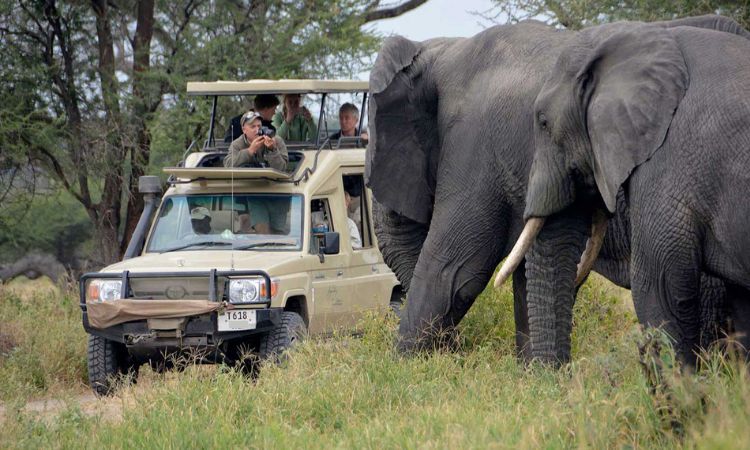
First Time Tanzania Safaris
A first-time Tanzania safari is usually built around the northern circuit — Tarangire, Lake Manyara, the Ngorongoro Crater and the Serengeti — a route chosen because it delivers the country's best-known wildlife experiences with manageable driving distances and reliable infrastructure, not because it's the only option. This category suits travellers who haven't been on safari before and want a trip that balances the classics — lion sightings, the crater's density of wildlife, wide Serengeti horizons — against a pace that isn't exhausting on a first attempt. Seven to ten days is typical, long enough to see each park properly without feeling rushed between them. We spend more time upfront with first-time safari travellers than with repeat guests, because the questions that matter most — what to pack, how malaria prevention works, what a game drive actually involves hour to hour, whether children will enjoy it — are usually new territory. Accommodation for this category tends toward well-run, established lodges and tented camps rather than the most remote or experimental options, simply because a proven property removes one layer of uncertainty from a trip you're taking for the first time. Many first-timers add a few days in Zanzibar at the end, which works well logistically and gives the trip a natural close. If you're deciding between Tanzania and Kenya for a first safari, the honest difference usually comes down to the Ngorongoro Crater, which has no real equivalent across the border.
Explore First Time Tanzania Safaris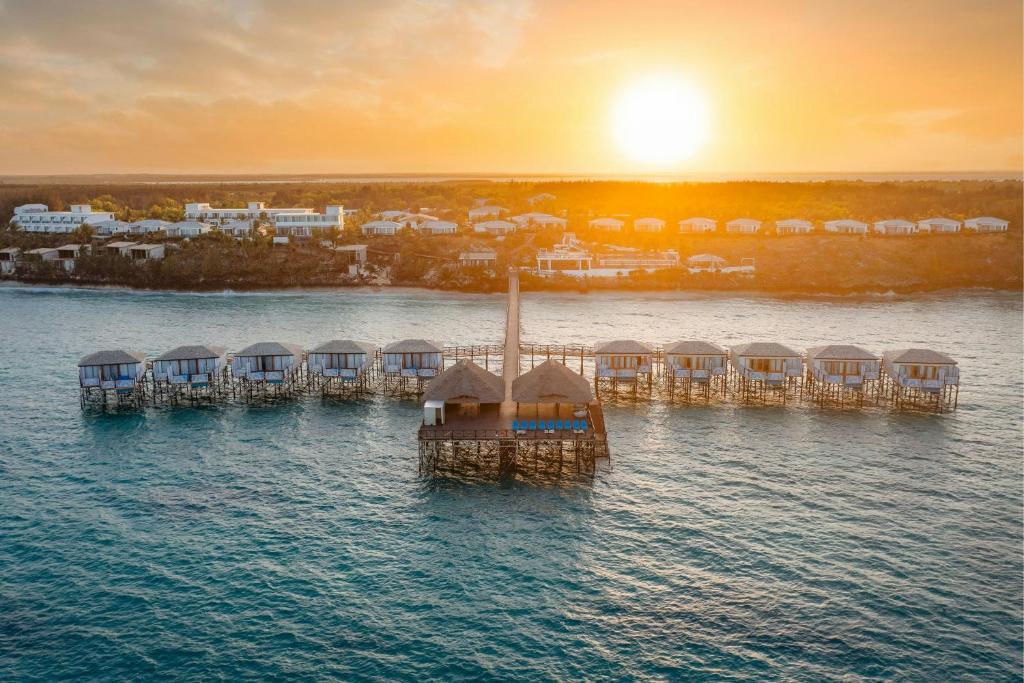
Tanzania Safari & Zanzibar Holidays
A Tanzania safari and Zanzibar holiday combines the northern circuit's game parks with several days on the Zanzibar archipelago's beaches, a pairing that works because the two halves of the trip are genuinely different rather than more of the same. Safari days start early, revolve around wildlife and cover ground; Zanzibar days slow down, revolve around the ocean, Stone Town's history and, for some, diving or snorkelling on the reef. This category suits travellers planning a longer Tanzania holiday, typically ten to fourteen days, who want both experiences rather than choosing one. The logistics are straightforward: a flight of around an hour connects Arusha or the Serengeti's airstrips to Zanzibar, so the transition between safari and beach doesn't eat into the trip. We generally sequence safari first, since early starts and dusty vehicles are easier to embrace at the beginning of a trip than at the end, and Zanzibar's slower pace makes a natural finish. A typical split might be five to six nights across Tarangire, Ngorongoro and the Serengeti, followed by four to five nights at Nungwi, Kendwa or a quieter stretch of the east coast. Stone Town, a UNESCO World Heritage site, is worth a half-day even for beach-focused travellers, and spice farm tours give useful context on the island's history beyond the resorts. We build a buffer day around the flight connection, since delays on light-aircraft routes are common enough to plan around.
Explore Tanzania Safari & Zanzibar Holidays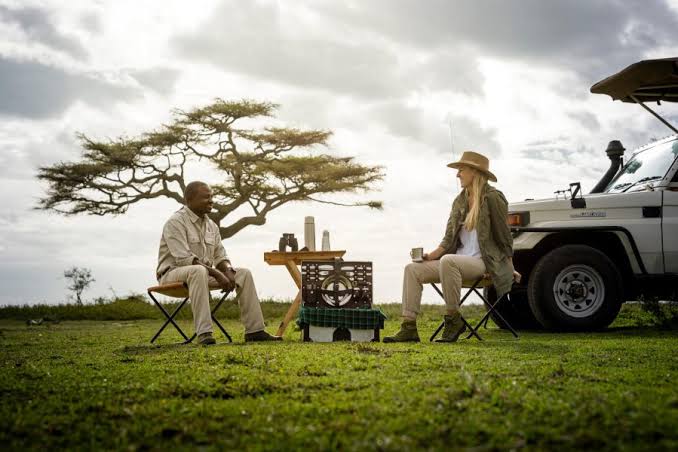
Private Tanzania Safaris
A private Tanzania safari means your own vehicle, your own guide and an itinerary built entirely around your interests, rather than a fixed departure date shared with other travellers. Every safari we run at Emnel operates this way — we don't sell seats on group trucks. This category is worth explaining on its own terms because the difference from a group safari is bigger than it sounds: your guide isn't managing the preferences of eight strangers, so a family that wants to linger at a leopard sighting for forty minutes can do exactly that, and a photographer who wants to skip a lunch stop for better light can ask for it. Pacing, wake-up times and which parks to prioritise are all decided with you before departure, and can shift once you're on the ground if something's working better than planned. Private safaris suit anyone — families, couples, solo travellers, small groups of friends — but they matter most to travellers with specific interests, mobility considerations, or simply a strong preference for control over their own schedule. Cost is naturally higher than a shared group vehicle, since you're not splitting the vehicle and guide fee across a full truck, but many travellers find the flexibility worth the difference once they've compared it to a shared safari. Our guides, who are also the people who built your itinerary, know the parks well enough to adjust the plan in real time.
Explore Private Tanzania Safaris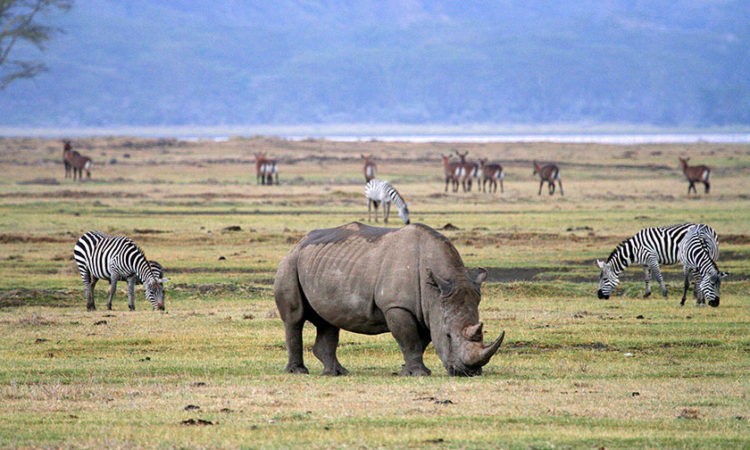
Big Five Safaris
A Big Five safari is built around giving you the best realistic chance of seeing lion, leopard, elephant, buffalo and rhino, the five animals historically considered the most difficult and dangerous to hunt on foot, and still the benchmark most travellers use to judge a safari's success. Tanzania is one of the few countries where all five are achievable on a single well-planned trip, largely because of the Ngorongoro Crater, which holds a small but relatively reliable population of black rhino alongside dense lion prides, in a compact area that makes sightings more consistent than almost anywhere else in Africa. The Serengeti adds leopard, usually spotted resting in riverine trees or rocky outcrops, plus large buffalo herds and its own substantial lion population. Tarangire and Lake Manyara round out elephant sightings, with Tarangire in particular known for large herds gathering near the Tarangire River in the dry season. This category suits wildlife-focused travellers who want an itinerary planned specifically around maximising Big Five sightings, though we're upfront that rhino sightings, even in the crater, aren't guaranteed on any single visit — we've had guests see all five in two days and others who needed a full week. Experienced guides make a measurable difference here, since spotting a resting leopard or a distant rhino takes practised eyes rather than luck alone. A seven-day itinerary across the crater, Serengeti and Tarangire gives realistic odds without over-promising.
Explore Big Five Safaris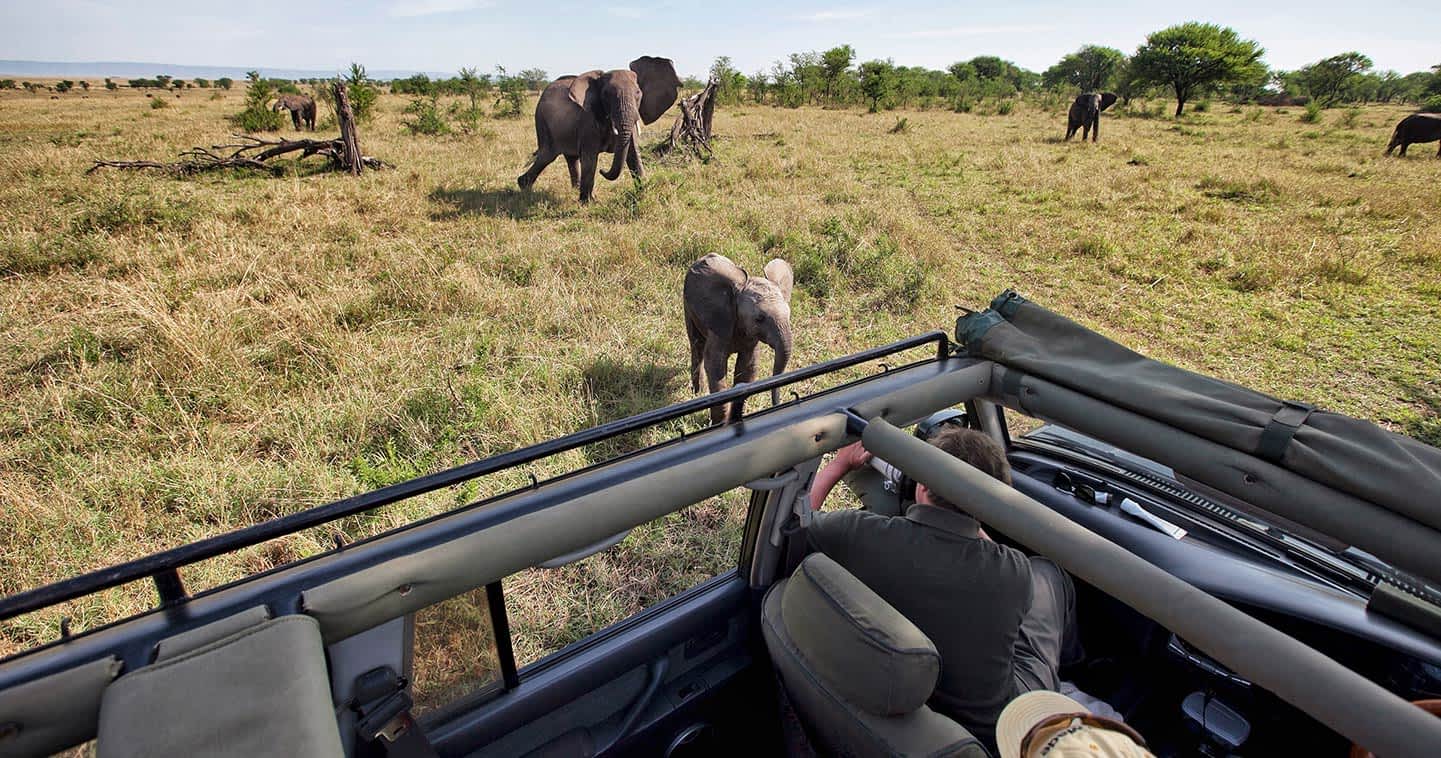
Short Tanzania Safaris
A short Tanzania safari, typically three to four days, focuses on the parks closest to Arusha — Tarangire, Lake Manyara and the Ngorongoro Crater — which between them deliver a genuinely representative slice of Tanzanian wildlife without the longer drive or flight required to reach the Serengeti. This category suits travellers with limited time: a stopover before or after a Kilimanjaro climb, an add-on to a longer Zanzibar beach holiday, or simply a trip where a week or more on safari isn't practical. Even in three days, a well-sequenced itinerary can cover elephant herds and baobabs in Tarangire, the tree-climbing lions Lake Manyara is known for, and the density of wildlife inside the Ngorongoro Crater, often considered one of the best single days of game viewing available anywhere in the northern circuit. We're upfront that a short safari means trade-offs — you won't experience the Serengeti's scale, and the Great Migration is out of reach unless it happens to be passing near Ngorongoro that particular week — but a well-planned short itinerary still delivers close, memorable wildlife sightings rather than a diluted version of a longer trip. Road transfers between these three parks are manageable, at two to four hours each, keeping actual travel time reasonable within a short window. We generally recommend starting in Tarangire and finishing in Ngorongoro, since the crater tends to be the most memorable day and works well as a close to the trip.
Explore Short Tanzania Safaris