
Great Migration Safaris
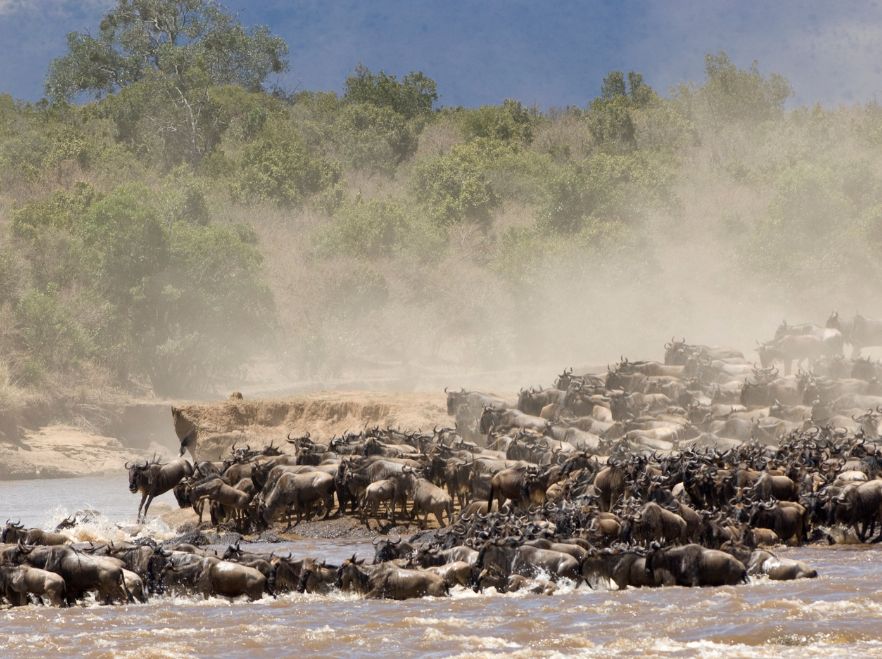
A Great Migration safari is built around following roughly 1.5 million wildebeest, alongside zebra and gazelle, as they move in a broadly clockwise loop through the Serengeti ecosystem in search of grazing and water. Where you should be depends on when you travel: December through March, the herds gather on the short-grass plains around Ndutu and southern Serengeti for calving season, drawing high concentrations of predators. By June and July they push into the western corridor, crossing the Grumeti River, before moving north toward the Mara River from roughly July to October, where the crossings most travellers picture are possible, though never guaranteed on any given day. This category suits wildlife enthusiasts and photographers who want a trip timed to a specific phase of the migration rather than a fixed set of parks, and who understand the herds move on their own schedule, not ours. We track migration movements through our guides in the field year-round, and we'll say plainly if a particular week isn't likely to deliver a river crossing — there's more value in positioning you correctly for calving season or predator action than promising a crossing we can't control. Camps along the migration route often relocate seasonally too. Pairing a migration-focused itinerary with the Ngorongoro Crater rounds out the trip with reliable Big Five viewing regardless of where the herds happen to be.
Who it's for
Wildlife enthusiasts, photographers and repeat safari travellers who want their trip timed to a specific phase of the migration, from calving season to river crossings.
Fitness: Easy — game drives, no walking required; some days involve longer drives to follow the herds.
Highlights
Good to know
Great Migration Safaris: your questions, answered
What does a private Tanzania safari cost?
It depends mainly on the season, the number of days and the lodges you choose. Our private northern-circuit itineraries start from about US$3,100 per person for five days in Classic comfort, and rise with Mid-Luxury and Luxury camps. Park and conservation fees are set by the government and make up a significant share of every safari, and they are included in our prices. Every itinerary page shows a starting price per person, and we quote exactly for your dates.
Is every Emnel safari private?
Yes. You have your own vehicle and your own guide for the whole safari, and the daily pace, start times and stops are set around you, never around a group.
Who will our guide be?
One of Emnel's own guides. The team that plans your safari is the team that runs it. About two weeks before you arrive, we send your trip companion, with your guide's details and everything else you need for the journey.
When is the best time to go on safari in Tanzania?
Tanzania offers excellent game viewing all year. June to October is the classic dry season, with easy game viewing and the migration in the north. January to March brings the calving season in the southern Serengeti. The long rains of April and May are quieter and greener, and some camps close. We will recommend the best timing and route for what you most want to see.
How does booking work?
Tell us your dates and ideas, and we will design an itinerary and send a detailed proposal. To confirm, we ask for a 30% deposit plus any domestic flights, which are issued on confirmation. You then receive your official confirmation, and about two weeks before you travel, your trip companion with every final detail.
Can we add Zanzibar to our safari?
Yes. A short flight from the Serengeti or Arusha takes you to Zanzibar's beaches. We recommend at least one night in Stone Town alongside your beach stay.